


Toronto tower has been given a bird-safe makeover
The Royal Bank Plaza in downtown Toronto — a site known for causing hundreds of bird collisions each year — has been retrofitted with Feather Friendly window markers, which break up reflections that birds mistake for the open sky and trees. The project began in May and completed in October, covering 55,000 square feet of exterior glass up to 16 meters. After decades of finding dead and injured birds at the site, FLAP Canada is celebrating this milestone. The Canadian charity worked with organizations Never Collide and Nature Canada to push for this retrofit, which is anticipated to save thousands of migratory birds.
* I photographed the beginning of this project in May, and I’ve spent weeks working on this article — interviewing several people involved, and researching the long history of this building and its impact on migratory birds. Please read the full story!
Read the full Greener Good article
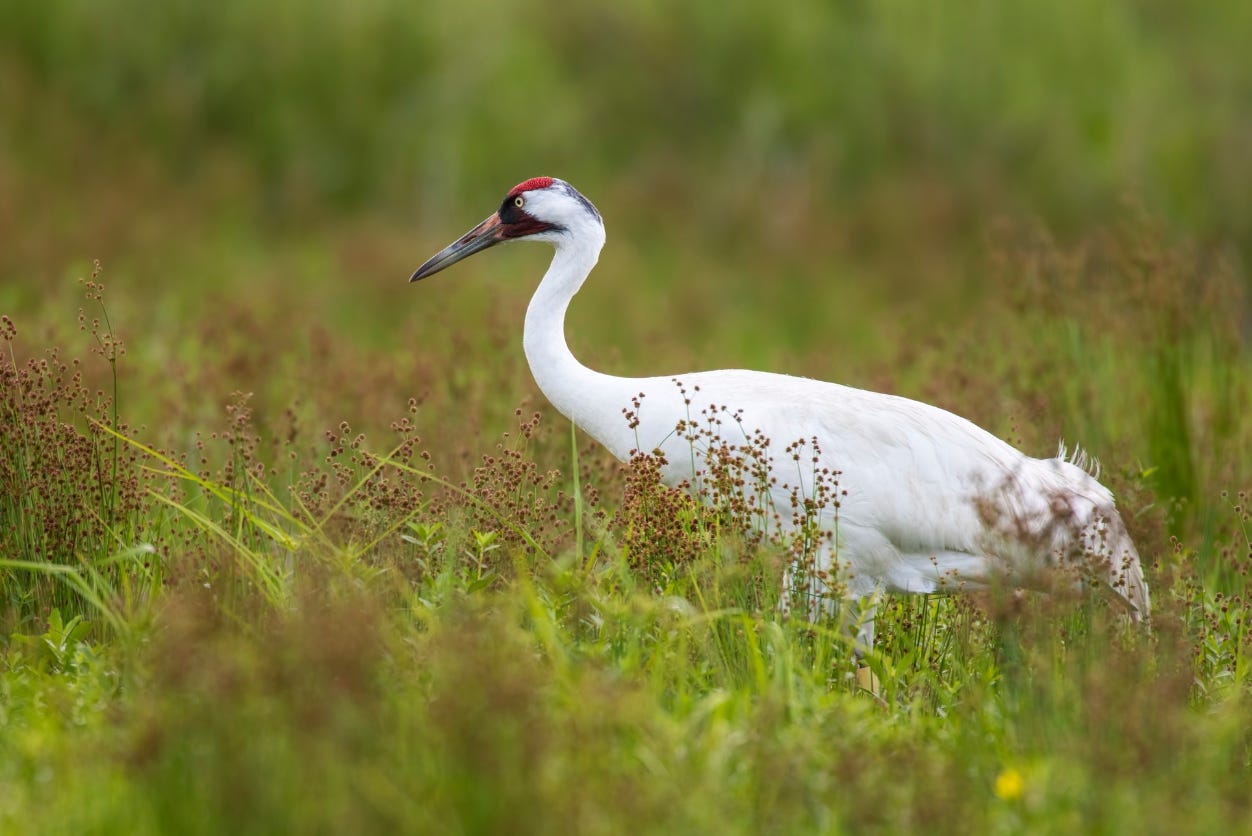
Whooping Crane sanctuary established in Texas
Conservation groups have established a new 3,300‑acre sanctuary along the Gulf Coast in Texas to protect the endangered Whooping Crane. Located near the Aransas National Wildlife Refuge, the Wolfberry Whooping Crane Sanctuary was created through land acquisitions totaling over $8 million, supported by The Conservation Fund, the International Crane Foundation, and other partners. The sanctuary will protect vital winter habitat not only for Whooping Cranes but also other threatened coastal species.
Villagers in India saving forests in the name of revered deities
In the Kumaon region of Uttarakhand, India, villagers are reviving a centuries‑old tradition of dedicating forests to local deities, like Kotgadi Bhagwati and Haat Kalika. By consecrating these forests in the name of revered gods and goddesses for periods of five to ten years and marking boundaries with religious symbols, communities are turning deforestation into a spiritual offense — which is proving more effective than legal penalties. Local forest councils are enforcing strict rules on access and use, allowing forests to regenerate naturally and helping biodiversity recover.
Conservation group buys 69-acre property in California
LandPaths, a Santa Rosa–based nonprofit, has purchased the 69‑acre Calvi Ranch in Sonoma County, California, protecting ancient redwoods, trout streams, and diverse wildlife habitat. Funded by private donors and the California State Coastal Conservancy, the acquisition ensures the land remains undeveloped, with plans for stewardship in partnership with local Indigenous communities and potential public access.
Women preserving Asia’s mangrove forests
Women’s groups are leading efforts to restore and protect the Sundarbans, the world’s largest mangrove forest. They’ve planted hundreds of thousands of mangrove saplings, managed nurseries, and connected this work to local jobs, helping families earn money through embankment protection and related crafts. Mangrove forests are crucial for coastal protection, biodiversity, and carbon storage. With support from NGOs like SEEDS, these women have grown their project from a few thousand saplings in 2020 to more than 415,000 in 2025, covering over 42 hectares. Their work is helping to strengthen the coast and encourages the whole community to take part in long-term conservation.