


For decades, Royal Bank Plaza was one of Toronto’s deadliest buildings for migratory birds. Every spring and fall migration, hundreds of birds collided with its golden glass towers, mistaking reflections of the sky and trees for open flight paths.
Located at 200 Bay Street, the Royal Bank Plaza has been monitored since 1996 by the Fatal Light Awareness Program (FLAP) Canada, a registered charity dedicated to reducing bird–building collisions. FLAP Canada volunteers patrol buildings throughout the city, collecting dead and injured birds. To date, volunteers have documented more than 4,600 collisions there, including 2,738 fatalities.
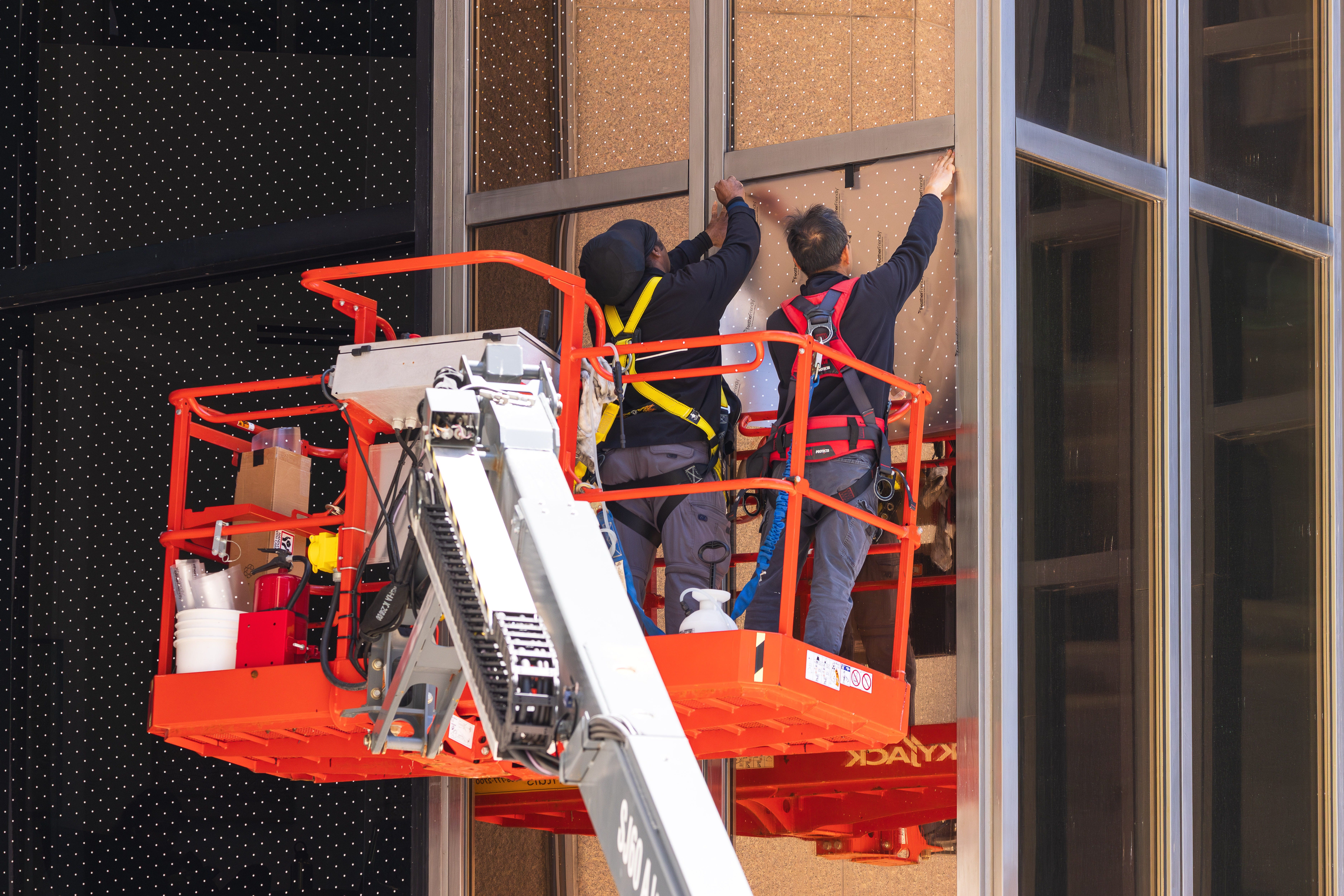
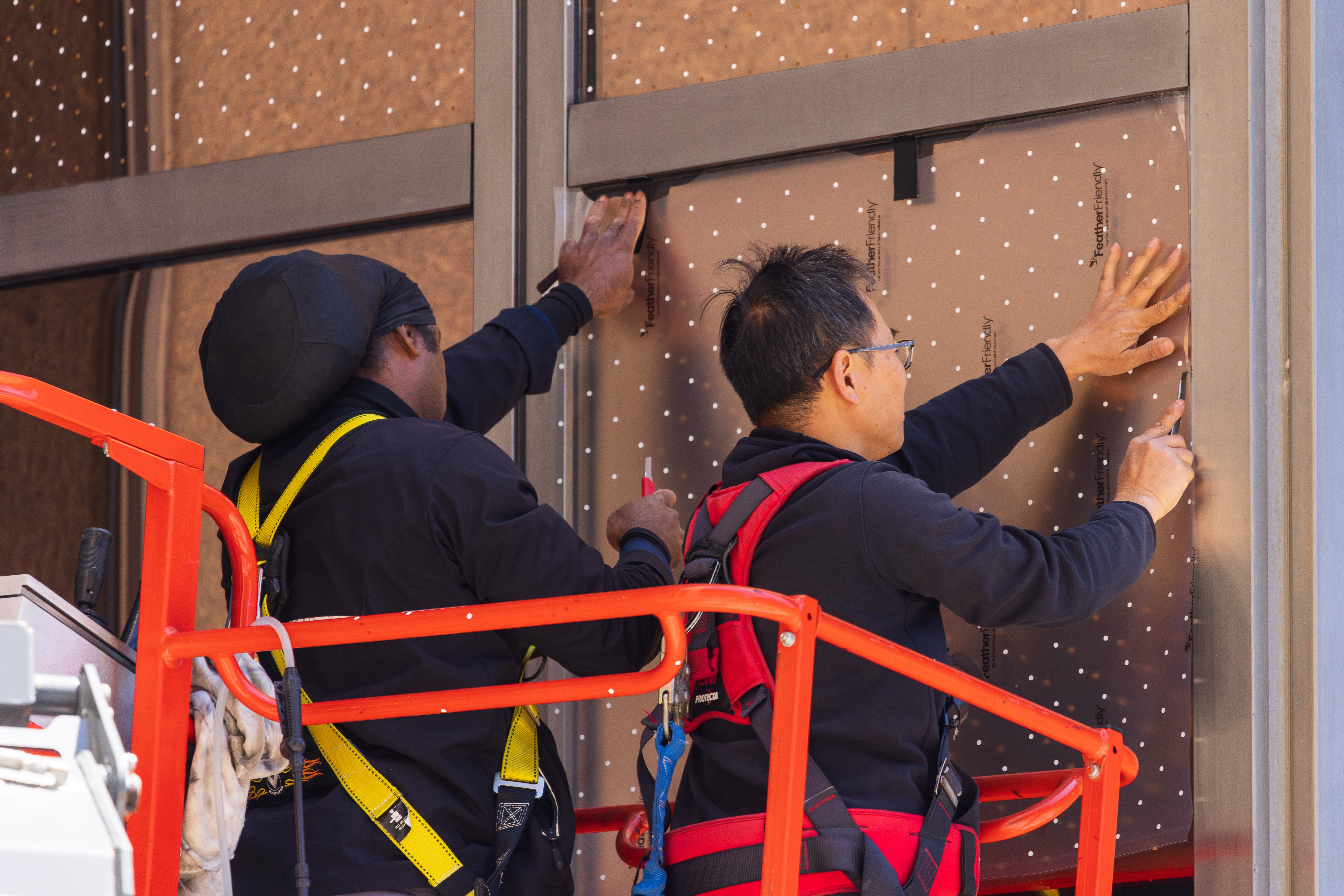
Now, after years of advocacy and persistence, this collision hotspot has been transformed. Over the summer of 2025, all facades were treated with Feather Friendly® adhesive markers — small, high-contrast dots that break up reflections and make glass visible to birds. These have been tested and recommended by leading authorities and are proven to dramatically reduce bird strikes.
“This project was more than just ‘a nice to have’ environmental initiative,” says Paul Groleau, Vice President of Feather Friendly. “It was imperative, since bird strikes were happening on a massive scale for decades.”
Although the retrofit is long overdue, advocates are celebrating this milestone — and hope it will set a precedent.
“I want to congratulate them,” says Michael Mesure, executive director of FLAP. “And I hope this will serve as a showcase for other buildings.”
A widespread issue
Across North America, collisions kill an estimated 381 million to 1.03 billion birds each year, with 16–42 million deaths in Canada and 365–988 million in the United States. Globally, the toll is thought to be in the billions.
Birds cannot perceive glass as a solid barrier; instead, they see reflections of trees, sky, and vegetation, and mistake them for reality. Or they see plants through transparent glass and attempt to fly to them. Collisions are most common during spring and fall migration, when high concentrations of birds are traveling to and from their breeding grounds.
Royal Bank Plaza was a textbook example of the problem, with large expanses of reflective windows. Like many other downtown towers, it sits near Lake Ontario on a migratory pathway. Many birds use shorelines as visual cues to help them navigate, congregating along the vegetated coastline to feed and rest. As they move inland, they can be funnelled into the maze of glass towers like this one.
Over the years, Mesure reached out to the owners and property managers, but every time he started to make headway, staff were replaced or the building was sold. Since it was built in 1979, the Royal Bank Plaza changed hands six times.
“This is the challenge with these massive pieces of real estate,” Mesure explains. “You put so much work into building relationships, and then boom — you’re starting from scratch with a whole new group of people.”
Strength in numbers
Mesure wasn’t the only one concerned about collisions at Royal Bank Plaza. In November 2021, Pearl Shore started writing to RBC and the building owners (then Oxford Properties and the Canada Pension Plan Investment Board), asking them to act. Shore is the founder of Never Collide, a volunteer organization that advocates for bird-safe buildings and provides DIY advocacy templates to help others effect change.
“It takes effort to educate owners on the issue and provide the science, data and solutions to stop bird collisions,” says Shore, “But most building operators that Never Collide have engaged with have done the work.”
This time, Never Collide and FLAP joined forces — and the timing couldn’t have been better. In January 2022, the building was sold to Pontegadea, the family investment vehicle of Zara founder Amancio Ortega. Colliers Real Estate Management Services took over property management. With a new owner and property manager, a window of opportunity opened.
That spring, Mesure and his colleague Lisa Horn conducted a BirdSafe® risk assessment for every façade of the building, evaluating factors like reflections and proximity to greenery. They also analyzed FLAP’s data, which provided a wealth of information about where birds tend to collide the most. The report outlined the most lethal facades and provided an action plan to reduce bird-window collisions.
In the fall of 2024, another voice joined the chorus: Nature Canada. Established in 1939, Nature Canada is the country’s oldest national nature charity.
Autumn Jordan, organizer of Nature Canada’s Bird Friendly City program, says that “Nature Canada leveraged Toronto’s Bird Friendly City status to move the needle forward for more bird-safe measures to take place.”
The trio wrote a joint letter to Pontegadea, RBC and Colliers, requesting mitigation measures to stop the bird-glass collisions at 200 Bay Street. By working together, they were finally able to achieve success.
“This time, bringing the three of us together and really starting to push is in part what made them take that final leap,” says Mesure.
Finally, in May of 2025, after years of effort, the trio got the news they had worked so hard for: formal confirmation that the retrofit would move forward, along with a note thanking them for their dedication to protecting birds.
“The grit and the continued communications paid off,” says Shore.
A tall order
The retrofit itself was no small undertaking. Approximately 55,000 square feet of exterior glass was treated, covering 94% of windows up to 16 metres — the height range where most bird collisions occur. This approach aligns with the City of Toronto’s Bird-Friendly Development Guidelines, which require visual markers on glass at lower levels of buildings to make windows visible to birds. While these standards are mandatory for new developments, this project demonstrates how existing buildings can also be brought into compliance through retrofit.
Installation began in mid-May and wrapped up in early October. The Feather Friendly® markers were installed by Toronto-based Convenience Group Inc. The markers are virtually invisible from the inside, and are designed to last more than 20 years.
“RBC management wanted a solution that was proven at scale and wouldn’t affect the building’s aesthetics,” says Groleau. “Once they saw the durability and performance on other large buildings, it was a straightforward decision.”
The building’s unusual geometry made installation especially complex, requiring boom lifts, custom scaffolding, and frequent repositioning to reach angled glass surfaces. “It’s not a simple up-and-down building,” explains Groleau. “The angled glazing means the installers had to reposition equipment often, and some corners only allowed access from very specific anchor points. Credit to the installers — they handled some tricky exposures.”
Will it work?
Mesure says it’s still too early for definitive numbers. Monitoring during the retrofit was limited due to scaffolding and fencing, and collision rates naturally fluctuate from migration to migration. FLAP volunteers will continue to monitor Royal Bank Plaza through upcoming spring and fall migrations, collecting the data needed to assess the retrofit’s real-world impact over time.
One thing is for sure: this project wills save thousands of birds’ lives.
In controlled studies and comparable projects, Feather Friendly installations have reduced bird collisions by 80–95%. McCormick Place in Chicago, one of the most lethal buildings in North America, was treated with the same product, and collisions were reduced by over 95%. In the fall of 2023, the building caused a whopping 1,280 bird fatalities; the fall after the installation, the number dropped to 18.
“Even though there will still be some collisions, I have peace of mind knowing there will be far fewer,” Mesure says.
From collision point to turning point
For Jordan, the retrofit sends an important signal — especially at a time when environmental protections are being rolled back elsewhere.
“We need all the good news we can get,” she says. “This proves it’s possible — even for iconic buildings with gold-plated windows.”
Groleau hopes the project will encourage other large property owners to act, particularly in dense downtown cores where bird deaths are concentrated.
“For me, the exciting part is that a building this prominent is taking the lead,” says Groleau. “When large towers commit, it sends a message to the rest of the industry.”
For those who spent years collecting fallen birds at the base of the towers, that message matters.
“It really is such a relief,” says Mesure. “And I just hope that we’ll see other buildings follow their lead.”
Amazing that they were all able to work together and that FLAP was so persistent. Takes so much time and patience. Thank you