


I hope your year is off to a wonderful start. Like many, I take this time to reflect on the past year — and that has included looking back at the stories I featured in my weekly Good News post. I’ve spent the last few days trying to pick my top ten favourites, but it’s not easy! It’s hard enough to pick five each week, but choosing from 180 stories over the last 36 issues is impossible. So I’ve decided to break down my favourites into categories.
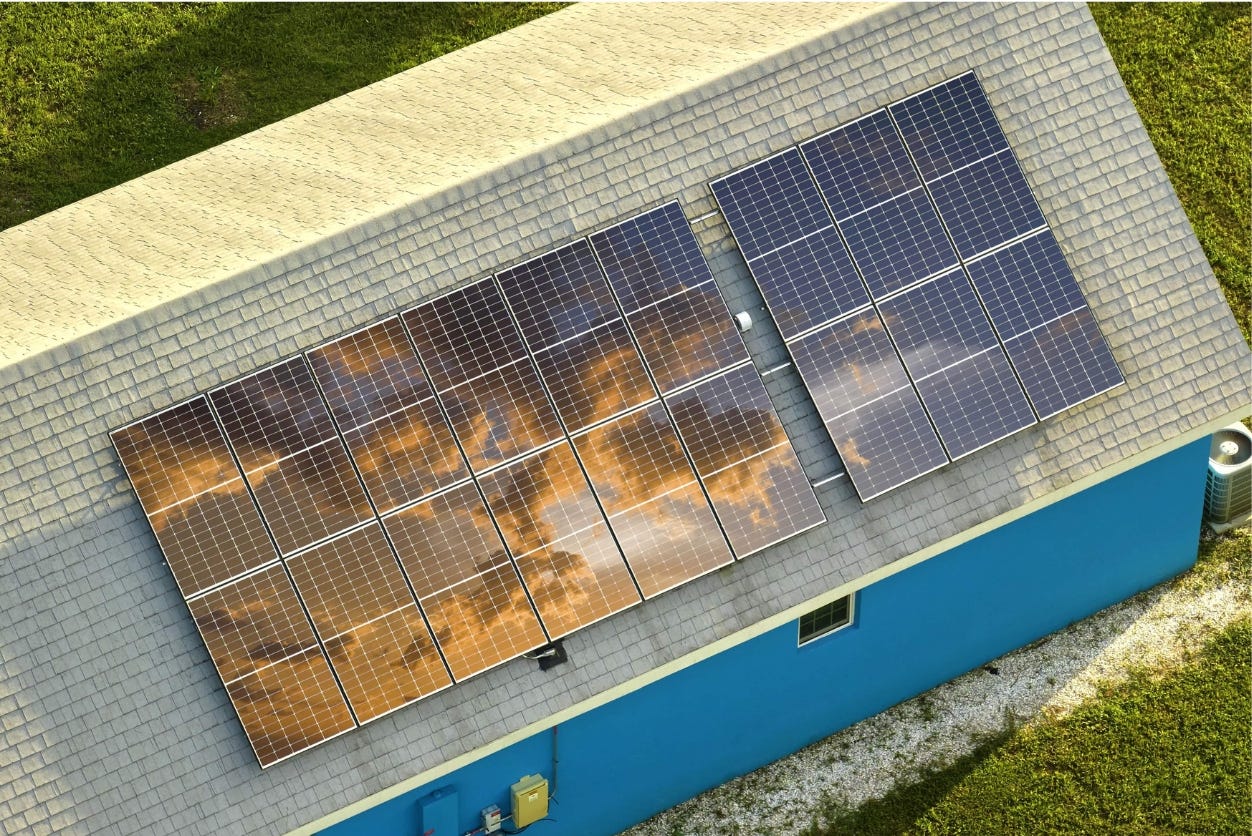
I’m starting with solar power because there were so many solar stories that caught my attention this year. Solar is being used in some really innovative ways, from art installations to mobile energy to balcony solar panels. And it’s being deployed in some of the most remote communities to promote energy independence, create jobs, and improve air quality. So let me shine a light on my favourite solar stories from 2025.
World’s largest solar mural powers Canadian building
A new installation in Edmonton, Alberta, has combined art and clean energy to create the world’s largest solar panel mural. The installation covers an apartment building with 400 solar panels, producing enough electricity to offset 150 tons of CO₂ annually — equivalent to taking 32 cars off the road. Designed by local artists and supported by the city’s sustainability fund, it’s a striking example of how public art and renewable energy can coexist beautifully.
Malawi village now 100% solar
Kasakula Village in rural Malawi has achieved a major milestone: 100 percent solar energy access for all homes, schools, and clinics. The project, led by the charity SolarAid, replaces costly and polluting kerosene lighting and candles with clean, reliable solar power. Residents report better school performance, safer nighttime conditions, and thriving small businesses. SolarAid is now working with the government to expand the project to other parts of the country.
Over a million Germans using balcony solar
Germany has now surpassed one million “Balkonkraftwerke,” plug-and-play balcony solar systems that allow apartment dwellers to generate their own clean energy simply by plugging solar panels into a wall outlet. New policies make it easier for tenants to install these systems without landlords stopping them, helping drive rapid adoption. Affordable, easy to set up, and capable of producing up to 760 kWh per year, the devices are cutting household emissions and lowering electricity bills.
Indigenous-owned solar project underway in B.C.
The Anahim Lake Solar Project in British Columbia is set to become Canada’s largest off-grid solar farm, providing clean energy to the Ulkatcho First Nation and significantly reducing their reliance on diesel power. Indigenous-owned and supported by BC Hydro’s first-ever Community Electricity Purchase Agreement, this initiative marks a major step forward in sustainable energy and environmental stewardship on Traditional Territory.
With construction underway and completion planned for October 2025, the project includes advanced microgrid upgrades and battery storage for reliable power distribution.
England’s mandates solar panels on new homes
By 2027, nearly all new homes built in England must include solar panels. The new policy, which aims to reduce emissions and lower energy bills, will legally require builders to install rooftop solar during construction. While initial construction costs will rise by £3,000–£4,000 per home, homeowners are expected to save at least £1,000 annually. The government also plans to offer grants and loans to retrofit existing homes with solar panels, reinforcing its commitment to net-zero goals.
California’s first solar-covered canal now online
California has brought online its first solar-covered canal as part of a Project Nexus, a pilot project in the Turlock Irrigation District that builds platforms of solar panels over irrigation canals. The method both cools the solar panels and shades the canals, reducing evaporation. The 1.6-megawatt system represents a growing trend of pairing infrastructure with renewable energy, with hopes to reduce electricity costs for irrigation and advance water-conscious clean energy deployment in agriculture.
Nunavut community switching to solar power
The Inuit hamlet of Naujaat is flipping the switch from diesel to solar. An array of 2,500 solar panels will power about 60% of the community, reduce diesel consumption by 30% and cut emissions by about 30,000 tonnes over the next 30 years. The project has also helped create local jobs. Residents look forward to turning off their noisy diesel generators and experiencing the silence that their ancestors once did.
Medicine Hat turning former industrial site into a solar park
The city of Medicine Hat, Alberta, is repurposing a former industrial site into the Saamis Solar Park — a 325-megawatt solar project that will provide clean, renewable electricity to the region. With Medicine Hat boasting 330 days of sunshine a year — more than any other Canadian city — the location couldn’t be any better.
Once complete, this will be one of the largest solar installations in Canada, supplying power to thousands of homes while reducing carbon emissions. The project highlights a growing trend of transforming underused industrial land into productive, climate-positive infrastructure.
U.S. building its first solar-powered steel mill
Pacific Steel Group is building the first solar-powered steel mill in the U.S., located in California’s Mojave Desert. The facility will produce up to 450,000 tons of rebar each year using mainly on-site solar and wind energy, cutting greenhouse gas emissions by about 370,000 tons annually—similar to removing 75,000 cars from the road. With advanced pollution controls and energy-efficient technologies, the mill aims to further limit its environmental footprint and is expected to reach full capacity by 2027.
The project will create nearly 450 jobs, support local recycling, and reduce energy costs through renewable power. Backed by $30 million in state tax credits, it sets a positive example for sustainable manufacturing in heavy industry.
Energy storage train brings clean energy to communities that need it
SunTrain, a Denver-based company, has introduced a mobile energy storage train system that transports electricity in battery-powered railcars across existing railways. Each railcar can store enough electricity to power thousands of homes and transport it to urban centres without building costly new transmission lines. By using the vast U.S. freight rail network, this system can be deployed immediately.
The company has completed successful prototypes and is planning a large-scale pilot project in Colorado, connecting wind and solar farms to a former coal plant. With significant funding and a long list of potential projects, SunTrain’s innovation could help utilities replace fossil fuel plants and manage renewable energy more efficiently, all while reducing costs and pollution.