


Hello friends,
Thank you for your patience while I took a break from my weekly Good News roundup. Life has been busier than usual. So without further adieu, here are my top 5 environmental good news stories to cap off the week.
Have a great weekend, and for my fellow Canadians, happy Thanksgiving!
Yours for the Greener Good,
Brett
Norway creates its biggest ocean refuge yet
Norway has created its largest marine protected area. The Andfjorden Marine Protected Area, established September 18, covers about 1,848 km² of ocean off the country’s northern coast. The area is home to large numbers of whales and seabirds, and its coral reefs and gardens, sponge communities, kelp forests and maerl beds serve as spawning and nursery grounds for fish. Zones with especially vulnerable wildlife get stricter protection, and a board of municipal, county and Sámi Parliament representatives will manage it. The designation raises protected waters off mainland Norway from about 4.8% to 6%.
Salmon return to Klamath River after world’s largest dam removal
Less than two years after four dams came down on the Klamath River in Oregon and California, salmon are returning faster than anyone expected. Researchers counted nearly 7,500 Chinook above the former dam sites in 2024 and more than 13,000 in 2025, a jump of about 72%. A peer-reviewed study found the fish had reoccupied 88% of their historical range within just two migration seasons. The removal reopened roughly 400 miles of habitat.
Wildlife bouncing back in Australia’s Blue Mountains
Six years after the Black Summer bushfires burned 72% of the area, new data shows threatened wildlife returning across 845,000 hectares of Greater Blue Mountains parks. Researchers analyzed more than a million camera-trap images and 700,000 audio recordings. They found Koalas, Spotted-tailed Quolls and Eastern Pygmy Possums, plus 17 threatened bird species. Brush-tailed Rock-Wallabies are recovering in Wollemi National Park after 25 years of fox control, and Superb Lyrebirds turned up at almost every monitoring site despite fears for them. A native rodent, the New Holland mouse, was also detected for the first time in two decades.
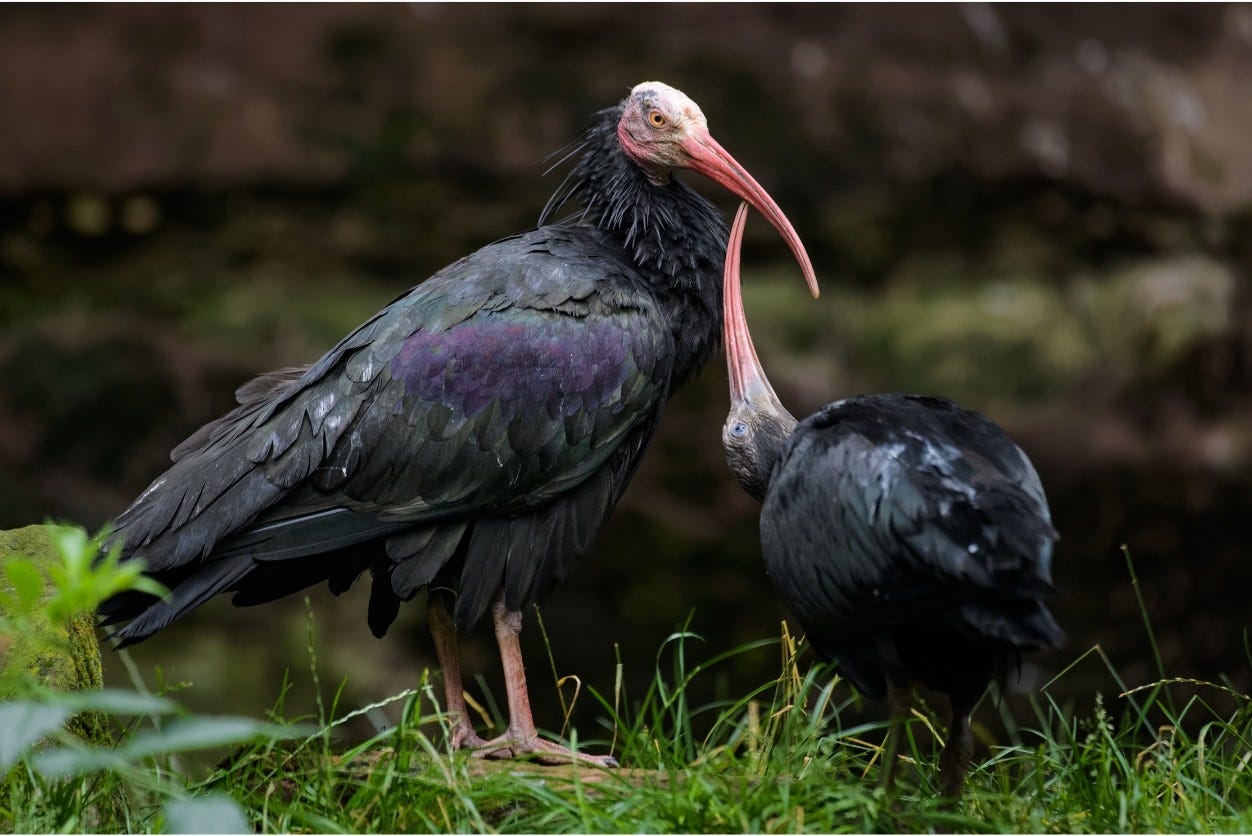
Ultralight aircraft escort rare Ibis flock to a new site
By the end of the 20th century, the Northern Bald Ibis population had fallen from 9,000 birds to just 250. Captive breeding and reintroduction programs in Austria and southern Spain have since helped bring the species back, and a newer project in Catalonia’s Alt Empordà has just welcomed 15 birds from Austria to join an established flock in Spain. Ultralight aircraft help guide the birds along their migration route between the sites. The long-term goal is at least 50 breeding pairs and about 300 wild birds in the area over the next decade.
Canada announces $2 billion heat pump program
Canada has announced a $2 billion, eight-year program of rebates for up to 820,000 homeowners who install cold-climate heat pumps. Households below the median income can receive up to $10,000, and other eligible homeowners $2,000. The government says households switching from oil, propane or electric resistance heating save more than $1,400 a year on average. Further measures target retrofits in up to 250,000 rental units and 30,000 units in multi-unit residential buildings, bringing the total goal to one million retrofitted homes.