


Here’s your weekly roundup of environmental good news stories from around the world. I hope these lift you up, give you inspiration, and remind you that despite the conflict and chaos, there are good people in this world making progress for the planet.
Indigenous ritual adapted to protect endangered cockatoo
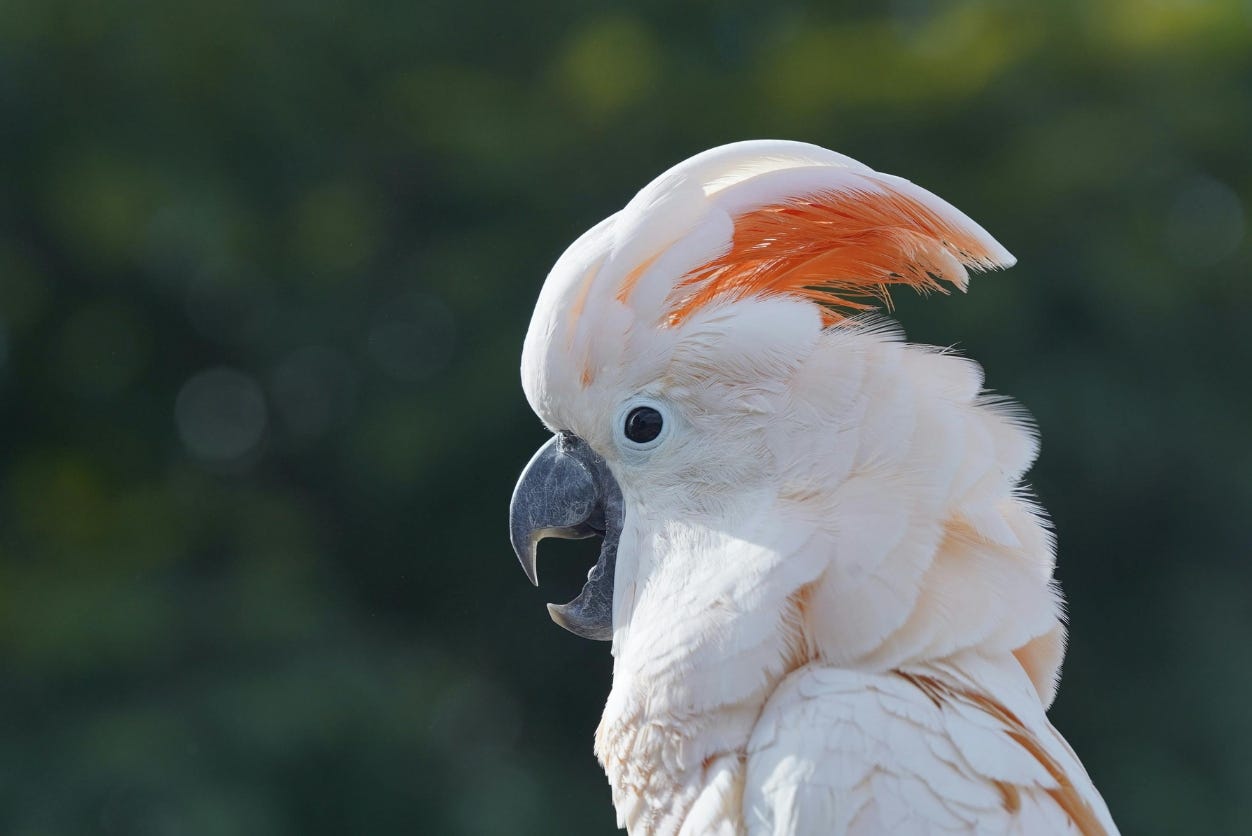
On Seram Island in Indonesia, the local Indigenous community has adapted an ancient tradition to help protect an endangered bird. The centuries-old coming-of-age ritual involves young Huaulu men wearing the crest feathers of the Salmon-crested Cockatoo (Cacatua moluccensis), a bird found nowhere else on Earth. Now, instead of killing these birds for their feathers, the Huaulu people are collecting naturally shed feathers from rehabilitation centers, rescue facilities, and zoos. Although Salmon-crested Cockatoos are still threatened by poaching, habitat loss, and the illegal wildlife trade, this new tradition represents an important step towards to their conservation.
New Zealand opens marine reserves with Maori co-management
New Zealand has opened new marine reserves under a co-management model that gives Maori communities a formal role in governance alongside the state. The new protections cover coastal and marine habitat and set out shared management responsibilities through national policy and local agreements. The reserves were opened this month as part of a model that combines legal protection with Indigenous stewardship.
Nepal’s tiger population has tripled
Nepal’s latest tiger census counted 429 wild tigers, more than triple the country’s 2009 baseline, after years of work by the Government of Nepal, local communities, WWF Nepal, and other conservation partners. The increase reflects habitat protection, prey recovery, anti-poaching efforts, and programs designed to reduce conflict between people and tigers across the Terai Arc. The new total comes from national monitoring across Nepal’s tiger range.
Bluefin Tuna return to Yorkshire waters
Atlantic bluefin tuna have been caught off the coast of Yorkshire for the first time since the 1960s, with researchers and fishers documenting the species in the North Sea after decades of absence. Bluefin disappeared from these waters following severe overfishing, and their return follows tighter international controls on catch and stock management. The catches mark the species’ first recent documented reappearance in Yorkshire waters in more than 60 years. Author’s note: This would be an even better story if they let them go.
Kazakhstan restores tigers to former range
On July 31, a female tiger named Umit was released into a nature reserve in Kazakhstan. This milestone comes after a decade of planning, with the intention of restoring the Caspian Tiger population in the region. They were declared extinct in 2003, with the last reliable sighting in the country more than 70 years ago. But DNA analysis has since revealed that the Caspian Tiger and the Amur Tiger are nearly identical — a breakthrough that laid the foundation for this conservation strategy. A wild-caught male flown from Russia is next to be released, followed by two wild tiger cubs.