


Here’s your weekly roundup of environmental good news stories from around the world. I hope these lift you up, give you inspiration, and remind you that despite the conflict and chaos, there are good people in this world making progress for the planet.
Gold Coast council halts funding for Springbrook cableway proposal
Gold Coast City Council in Queensland, Australia has voted to stop spending public money on investigating a proposed cableway to Springbrook National Park. The decision comes after sustained opposition from a coalition of 15 community and environmental groups, ending further route work and consultation. Advocates argued that the project, which would cross a World Heritage-protected site, would destroy habitat, impact endangered species, introduce weeds and disease, and risk fire and landslides.
Researchers find huge number of rare plants at protected forest in Philippines
A new study found that Mounts Palay-palay-Mataas-na-Gulod Protected Landscape, near Manila, remains a significant refuge for Philippine biodiversity despite its proximity to a heavily urbanized area. Researchers documented 42 plant species found only in the Philippines and 31 species listed as threatened nationally or internationally. They also found that the forest interior is dominated by guijo (Shorea guiso), a critically endangered tree, reinforcing the protected landscape’s role as an important conservation stronghold.
US appeals court says EPA cannot claw back billions in climate grants
A federal appeals court ruled that the U.S. Environmental Protection Agency cannot terminate roughly $20 billion in climate and clean-energy grants that had already been awarded. The decision protects funding intended for emissions-cutting projects and community climate investments, and blocks a major rollback effort by the agency.
Court dismisses challenge to FERC clean-energy interconnection reforms
A court dismissed an industry challenge to Federal Energy Regulatory Commission reforms designed to speed up the process of connecting new energy projects to the grid. The reforms are intended to reduce long interconnection backlogs that have slowed deployment of renewable energy and storage in the U.S. Keeping those rules in place matters because grid connection delays have become one of the biggest bottlenecks for clean energy expansion.
New conservation deed aims to protect habitat in Papua New Guinea
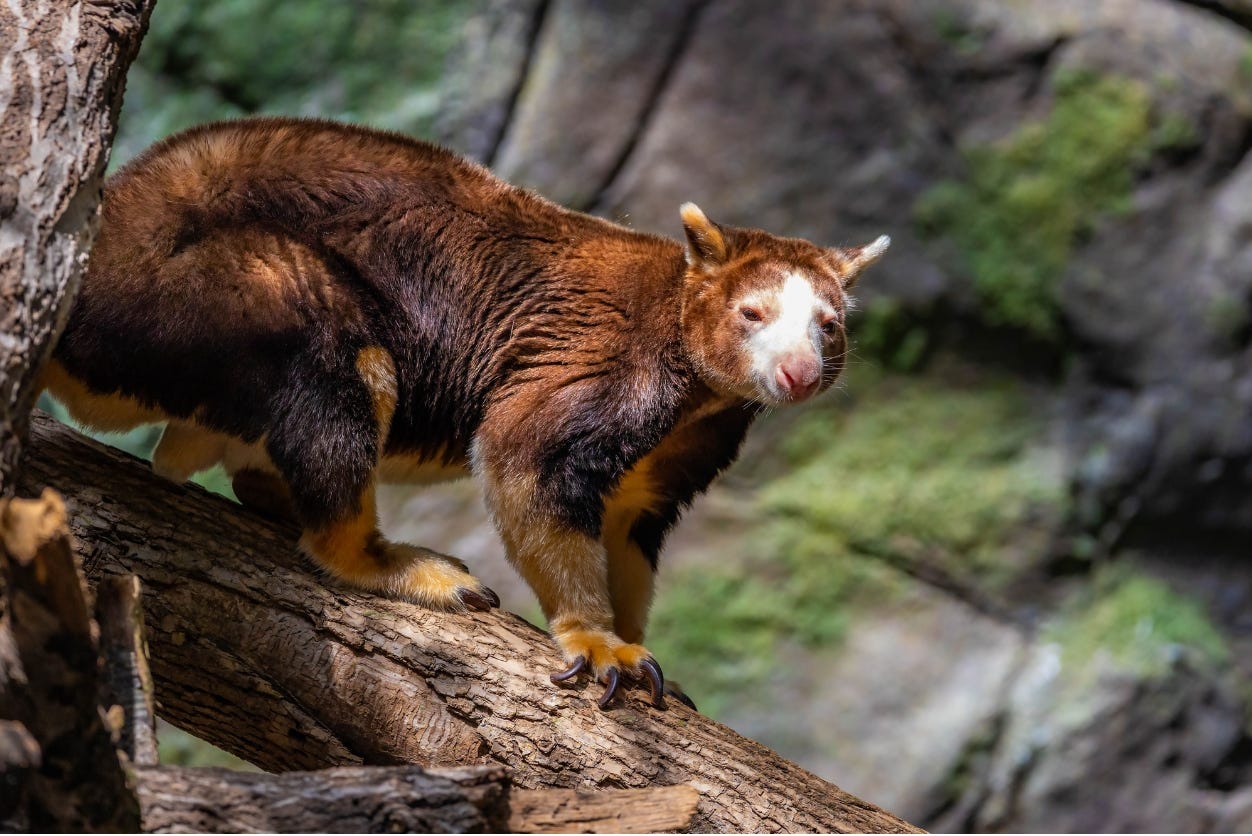
A new conservation deed signed by leaders of the Tenkile Conservation Alliance (TCA) aims to protect the densely canopied forests of the Torricelli Mountains in Papua New Guinea. The agreement is intended to keep forests intact, protecting habitat for critically endangered Tree Kangaroos and many other species — the area is home to an estimated 4% of the world’s biodiversity. With hundreds of signatures across 41 villages, the agreement uses a locally negotiated framework that balances conservation with community livelihoods and land rights.