


Here’s your weekly roundup of environmental good news stories. Enjoy!
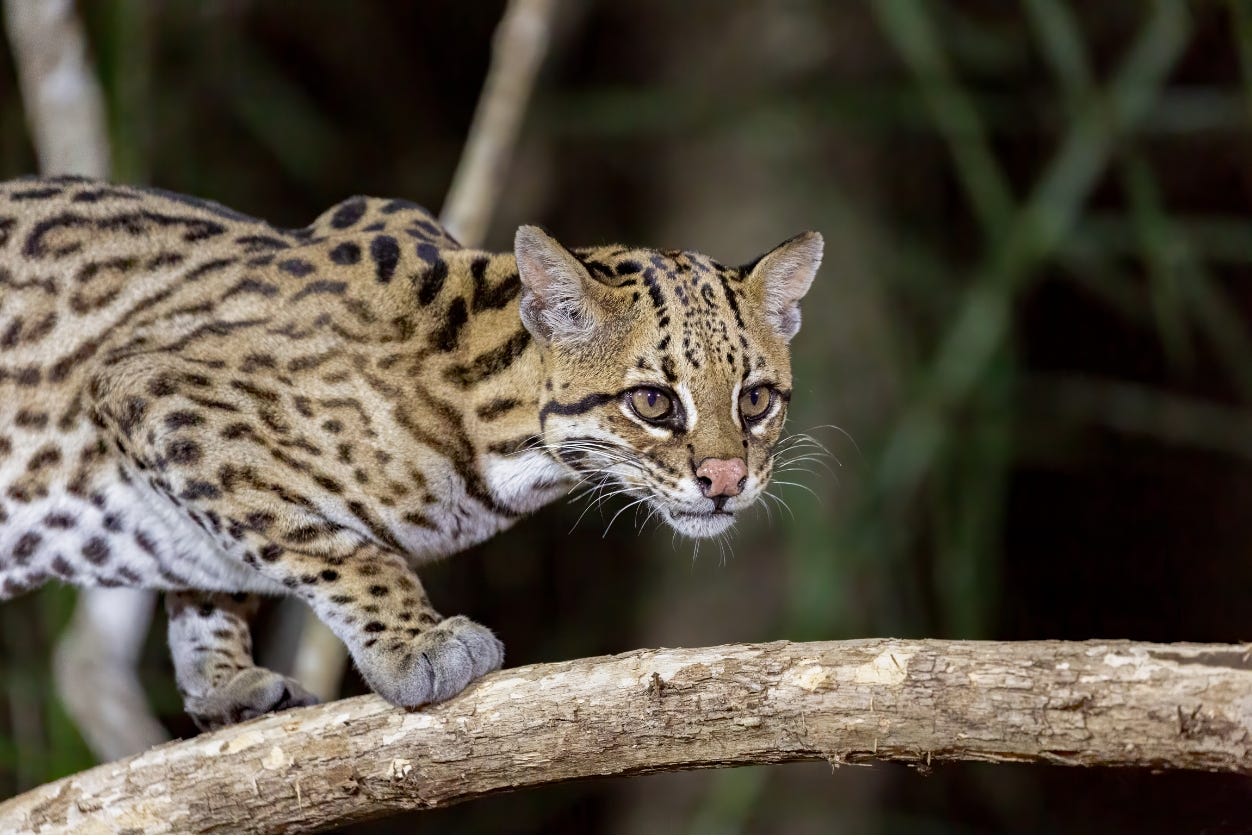
Ocelot kittens born in Texas
The Caldwell Zoo in Texas announced the birth of two ocelot kittens, part of a coordinated breeding effort aimed at saving one of the state’s most endangered mammals. Fewer than 100 ocelots remain in the wild in the United States, making every successful birth an important genetic contribution to future recovery efforts.
Learn more
Quebec advances rare earth magnet recycling
Montreal-based Geomega Resources has secured environmental approval for its demonstration plant that recycles rare earth magnets used in electric vehicles and wind turbines. The project aims to recover critical minerals domestically, reducing dependence on new mining while helping build a circular economy for clean technologies.
Nature restoration is becoming an investable asset
At Broughton Sanctuary in North Yorkshire, more than 330,000 trees have been planted and wetlands are being restored, as part of a large-scale rewilding effort. The 1,100-hectare estate will undergo more rewilding with investment firm Rebalance Earth, which raises private capital from impact investors for nature restoration projects. The firm operates under the premise that healthy ecosystems deliver measurable economic benefits such as carbon storage, flood reduction, and improved biodiversity. Projects like Broughton could help scale restoration efforts that governments alone cannot fund.
America’s first fully integrated solar factory begins production
Qcells has begun manufacturing solar cells at its new facility in Cartersville, Georgia, creating what the company says is the first fully vertically integrated solar factory in the United States. Once fully operational, the site will produce enough components to support roughly 8.6 gigawatts of annual output — enough to power approximately 1.3 million homes each year.
Kangaroo Island eliminates feral pigs
After years of intensive work, Australia’s Kangaroo Island has officially declared victory over its invasive feral pig population. The eradication program removed 878 pigs and was followed by two years of surveillance confirming none remained. Feral pigs devastate native ecosystems, damage habitat, and prey on wildlife. Their removal is expected to improve conditions for countless native plants and animals, making this one of the world’s largest island invasive-species successes.