


Here’s your weekly roundup of environmental good news stories. When fear and conflict dominate the headlines, may these stories bring you hope.
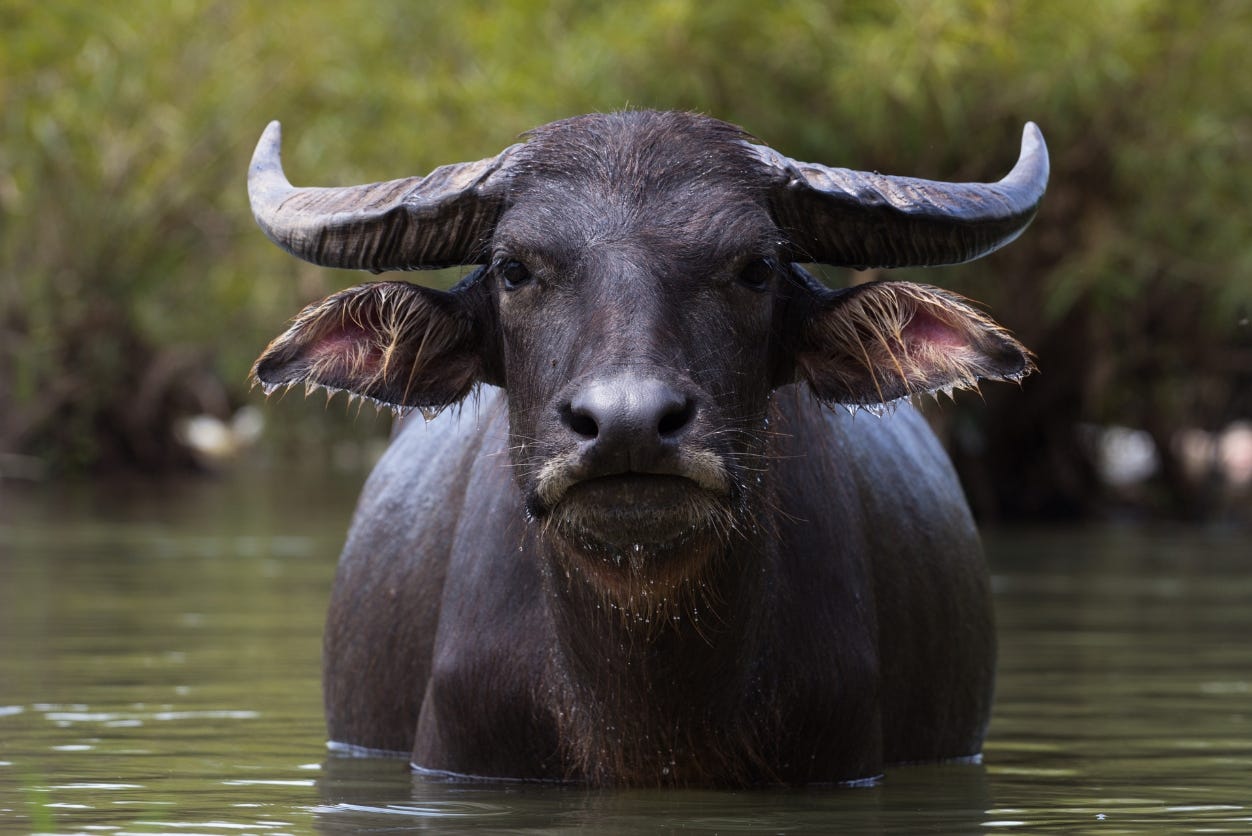
Water Buffaloes return to central India
For the first time in over 100 years, endangered Water Buffaloes are roaming the forests of Madhya Pradesh in central India. One male and three females were carefully transported from Kaziranga National Park to Kanha Tiger Reserve, where the species once thrived before hunting and habitat loss wiped them out. The translocation is the first phase of a three‑year plan to establish a self‑sustaining breeding population of at least 50 animals.
Wake Atoll is freed of invasive rats
On Wake Island, a remote coral atoll in the Pacific, a team led by Island Conservation has successfully eradicated invasive rats that had devastated the island’s wildlife for eight decades. Within months of the rodents’ removal, 16 species of native birds are now breeding in record numbers, geckos and skinks have reappeared, and thousands of Pisonia Grandis trees are sprouting where none had grown in living memory. The project demonstrates that even severely degraded islands can recover rapidly once the pressure of invasive predators is lifted, offering hope for similar efforts on dozens of threatened Pacific atolls.
Thailand moves to curb air pollution
Thailand’s Cabinet has approved sweeping emergency powers to combat the choking smog that blankets the country’s northern provinces each dry season. Under the new measures, authorities in 17 provinces can now order factory shutdowns, restrict vehicle access, and halt open burning whenever air quality reaches hazardous levels. The rules also require large industrial facilities to install real‑time pollution monitors linked to a public dashboard, giving residents immediate visibility into local emissions. Health officials estimate that air pollution causes thousands of premature deaths annually in the region, and the measures respond to years of citizen protests demanding cleaner air.
India’s rare Swamp Deer find a second home
A decade‑long conservation project in central India has paid off: the translocated herd of hard‑ground Swamp Deer in Satpura Tiger Reserve has grown from 98 founders to 172 thriving individuals. The subspecies was once confined to a single population in Kanha, leaving it dangerously vulnerable to disease or catastrophe. Forest officials moved the first animals to Satpura in 2016, and anti-poaching patrols and habitat management have allowed the animals to breed. Fawns are now born each monsoon season, and two additional satellite herds have been seeded in nearby reserves using the same model. Conservationists say the success offers a replicable blueprint for rescuing other single‑site species before it’s too late.
Angola Protects its highest mountain
Angola has officially declared Mount Moco part of a new 22,000‑hectare protected area, safeguarding the country’s last patches of Afromontane forest and dozens of rare birds found nowhere else. Local communities, supported by the Kissama Foundation and World Land Trust, have already planted 8,000 native trees and switched to clean cooking fuel to prevent further deforestation. It’s a landmark step for one of Africa’s most threatened ecosystems.