


Here are the week’s top 5 environmental good news stories. When fear and conflict dominate the headlines, may these stories bring you hope.
Mobile technology helps protect Mountain Gorillas
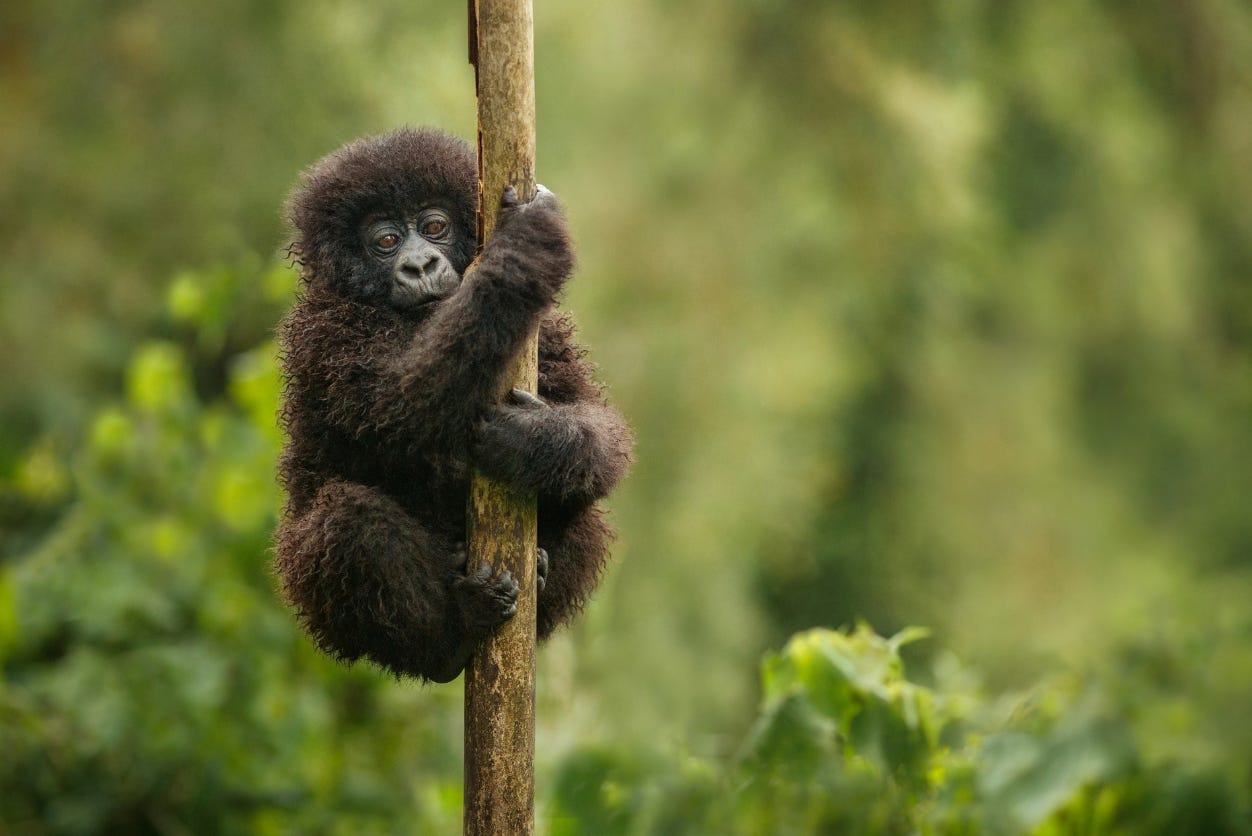
Mobile software called the Spatial Monitoring and Reporting Tool (SMART) is helping conservationists track wildlife and protect Mountain Gorillas in Central Africa. Conservationists use SMART to create maps, navigate patrol routes, upload sightings, and analyze data. Rangers can record signs of poaching, habitat damage, and wildlife sightings in real time, allowing managers to deploy patrols more efficiently. With improved law enforcement and decision making, Mountain Gorilla numbers have risen from 480 in 2010 to an estimated 1,063 today.
Colombian activist helps halt fracking project
Environmental advocate Yuvelis Morales Blanco has won a Goldman Environmental Prize for stopping a proposed fracking project along Colombia’s Magdalena River, the country’s largest waterway. Working with grassroots groups and legal advocates, she helped secure court rulings recognizing the river’s legal rights and blocking pilot fracking operations that threatened drinking water, fisheries, and wetlands. The legal victory prevented exploratory fracking projects from moving forward and strengthened protections for ecosystems along a river that supports millions of people and extensive biodiversity.
Colorado’s new wildlife overpass becomes the largest in North America
The new Greenland Wildlife Overpass in Colorado is now the largest wildlife overpass in North America. Built over Interstate 25 in Colorado, the overpass spans six lanes of interstate traffic, connecting 39,000 acres of habitat. It is strategically located to address the 3.7 mile gap from other wildlife crossings, helping animals like deer, elk, bears, and smaller species to move safely between habitats that were previously cut off by traffic. Projects like this have been shown to reduce wildlife-vehicle collisions by up to 80–90%, while restoring migration routes and improving long-term genetic diversity in wildlife populations.
Chernobyl exclusion zone becomes refuge for diverse wildlife
Forty years after the 1986 nuclear disaster, the Chernobyl Exclusion Zone has become a major refuge for wildlife, supporting populations of wolves, lynx, deer, wild boar, and rare species such as European Bison and Przewalski’s Horses. With human activity largely absent, forests and wetlands have regenerated, allowing ecosystems to recover. Studies show that wildlife populations in parts of the zone are comparable to or higher than those in surrounding regions, demonstrating large-scale ecosystem recovery despite the region’s history of contamination.
Kigali undertakes massive wetland restoration project
Kigali, Rwanda, is undertaking the largest urban wetland restoration project in Africa. Five interconnected wetlands, spanning nearly 500 hectares, are being rehabilitated to reduce flooding, improve water quality, and support biodiversity. The project will help protect an estimated 220,500 people in flood-prone neighbourhoods while improving ecosystem health. These wetlands will also serve as urban parks, with linked pathways and learning hubs to provide environmental education. The project is expected to prevent $45–90 million in flood damage, create 7,500 jobs, and attract 1.5 million visitors annually in coming years.