


Happy Earth Day!
Today marks the one-year anniversary of the Greener Good. I chose to launch on Earth Day because my mission was to celebrate and inspire positive action for the environment. All of our individual actions add up to create change. In fact, that’s the message of this year’s Earth Day theme: “Our power, our planet.”
None of these good news stories would have happened without individual actions. Behind these headlines are volunteers planting trees, commuters taking public transit, citizen scientists monitoring endangered species, and many more kind souls. We all have opportunities to act, from signing petitions to growing native plants to buying secondhand.
I want these good news stories to spark hope, but more importantly, I want them to inspire action. We all have the power — and the responsibility — to affect change.
Yours for the Greener Good,
Brett
London’s new Queen Elizabeth II Garden is a haven for wildlife
The Queen Elizabeth II Garden in London’s Regent’s Park is already teeming with life ahead of the public opening on April 27. Formerly a decommissioned plant nursery, the site has been transformed into a “micro-mosaic” of habitats, including ponds, wildflower meadows, and hedgerows. Royal Parks staff and more than 3,000 volunteers planted the entire two acres with 200,000 spring bulbs, 900 Blackthorn saplings, 4,500 plugs of climate-resilient sphagnum moss, and 40 tree species. The garden has already attracted geese, dragonflies, grey wagtails, hedgehogs, newts, butterflies and foxes.
Cranes in the UK reach record-high numbers
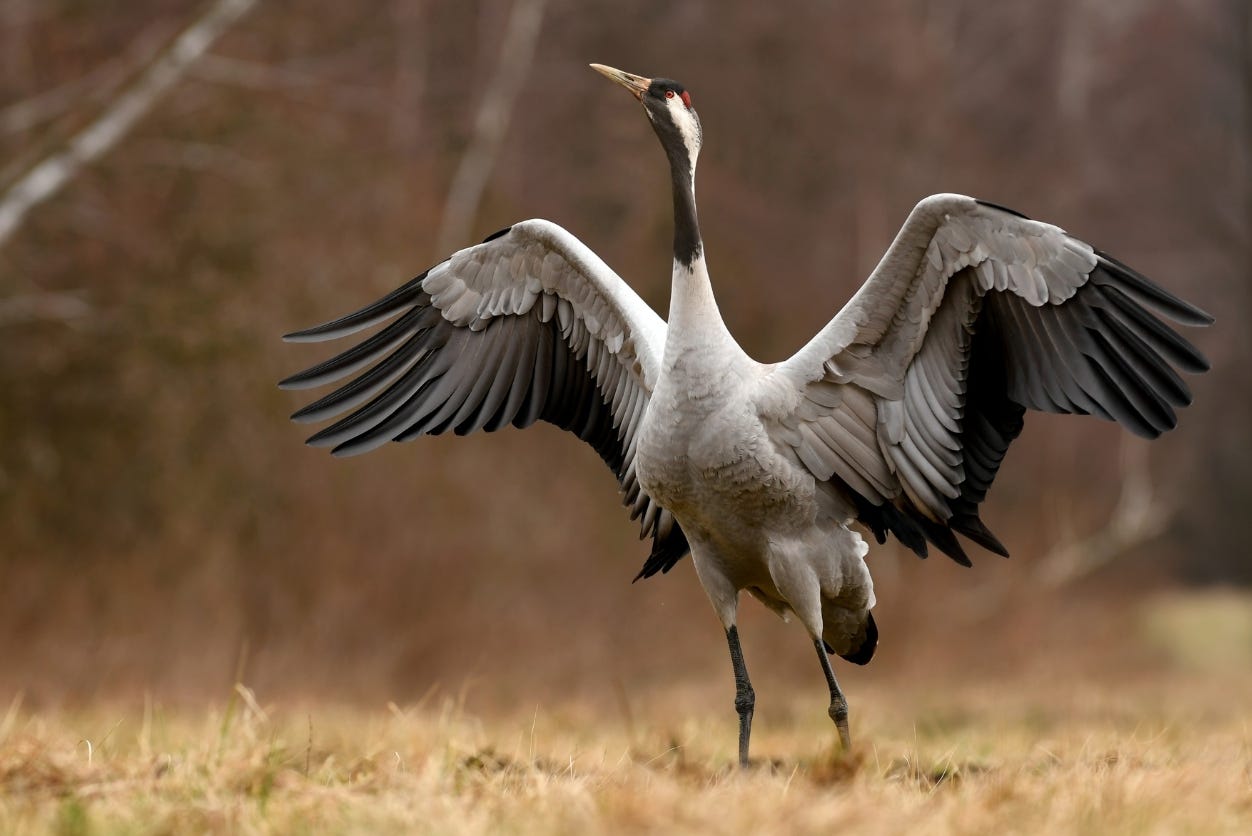
A record number of Common Cranes (Grus grus) bred in the UK last year, with 87 pairs raising 37 young, bringing the total to around 250 individuals. Cranes disappeared from the UK over four hundred years ago due to overhunting and habitat loss, but they started to recolonize when a small flock from mainland Europe came to Norfolk. Now, thanks to wetland restoration and breeding programs, Cranes are making a steady recovery.
Monarch butterfly population surges by more than 60%
Monitoring data shows Monarch Butterfly (Danaus plexippus) populations in Mexico increased by roughly 64% in the winter of 2026 compared to the same period in 2025. According to WWF Mexico, monarchs occupied 2.93 hectares of forest this winter, up from 1.79 hectares the year before. This marks the largest monarch butterfly forest coverage since 2018, a result of conservation efforts such as habitat restoration and protection of overwintering forests.
19 cities cut air pollution by more than 20%
New research by Breathe Cities shows that nineteen cities across Europe, North America and Asia reduced fine particulate matter and nitrogen dioxide by at least 20% since 2010, with some achieving reductions of nearly 45%. Pollution reduction was linked to measures like electrifying public transport, limiting polluting vehicles, and modernizing industry — demonstrating that sustained policy action can improve air quality within just 10 to15 years when cities take sustained action to reduce the biggest pollution sources.
Researchers use algae to remove microplastics from water
Scientists have developed a new algae-based system that can remove more than 90% of microplastics from water in just one hour. It works using natural hydrophobic interactions — making microplastics stick to algal cells — so they clump together and can be removed from wastewater. The approach doesn’t just remove pollution — it converts the captured plastics into useful composites. By combining cleanup with recycling and resource production, the researchers describe the platform as a cost-effective and sustainable pathway that could help address microplastic pollution while creating new value from waste.