


Each week, we bring you stories of environmental good news from around the world — reminders that even in these turbulent times, people and nature are finding ways to recover and thrive. May these stories inspire hope for a healing planet.
11 New species discovered in Cambodia’s caves
A multi-year biodiversity survey led by U.K.-based charity Fauna & Flora uncovered at least 11 new species in Cambodia’s limestone caves. Their discoveries included a bright turquoise pit viper, a “flying” snake, and three geckos. Researchers explored dozens of caves, many never studied before, revealing ecosystems rich with unique and highly specialized life. Scientists say they have only scratched the surface of what remains unknown — and why protecting fragile cave habitats is critical before species are lost before they’re even discovered.
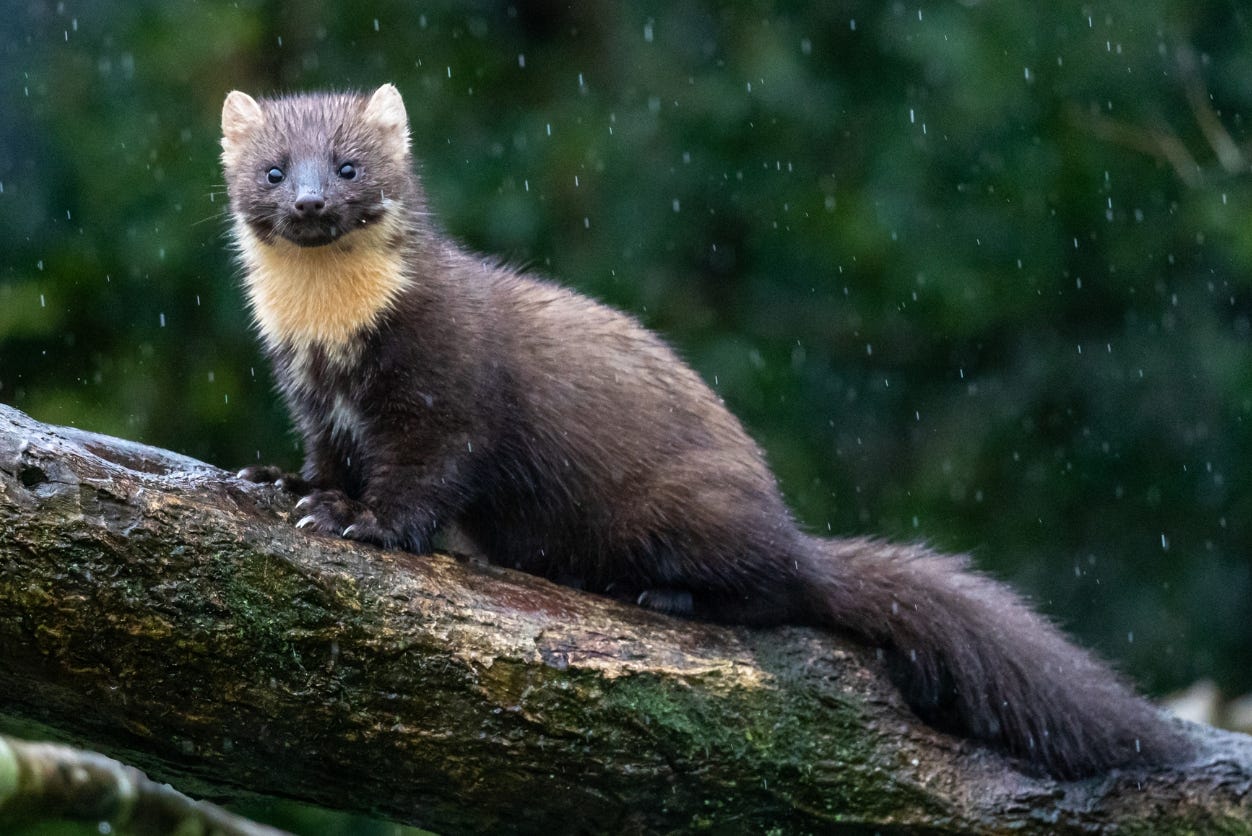
Pine Marten spotted in southern England after near extinction
Trail cameras near Cornwall have recorded a Pine Marten — a species that has been absent for over a century. A nocturnal mammal related to weasels and otters, the Pine Marten was once common, but was almost hunted to extinction in the 18th and 19th centuries. Conservationists are “utterly staggered” by the sighting and say it’s a “positive sign that nature can be restored”. The return of this predator could help restore balance in woodland ecosystems, where the species plays an important role as a predator and seed disperser.
Endangered Wild Bustard chick hatched in the wild using “foster egg” strategy
In a major breakthrough for one of the world’s rarest birds, a Great Indian Bustard chick has hatched in the wild — the first in a decade. The egg was laid at a captive breeding centre in Sam, Jaisalmer, transported for more than 700 km in a handheld incubator, and transferred to a wild nest in Gujarat. The chick hatched on March 26 and is now being raised by a wild female, marking a critical step toward rebuilding natural populations.
Beavers transforming Dorset’s landscape
One year after being reintroduced in Dorset, beavers are dramatically reshaping the landscape: building dams, restoring wetlands, and creating habitat for a wide range of species. Their activity has slowed water flow, improved habitat complexity, and attracted wildlife including birds, amphibians, and mammals. Conservationists say the project is a powerful example of how reintroducing keystone species can kickstart ecosystem recovery.
Global treaty expands protection for migratory species
More than 130 countries agreed to new protections for dozens of migratory species under the Convention on the Conservation of Migratory Species. Animals including cheetahs, sharks, and otters received stronger protections, with commitments to reduce threats and improve habitat connectivity. Conservationists say the agreement marks an important step toward coordinated global action for species that cross borders.