


Each week, we bring you stories of environmental good news from around the world — reminders that even in these turbulent times, people and nature are finding ways to recover and thrive. May these stories inspire hope for a healing planet.
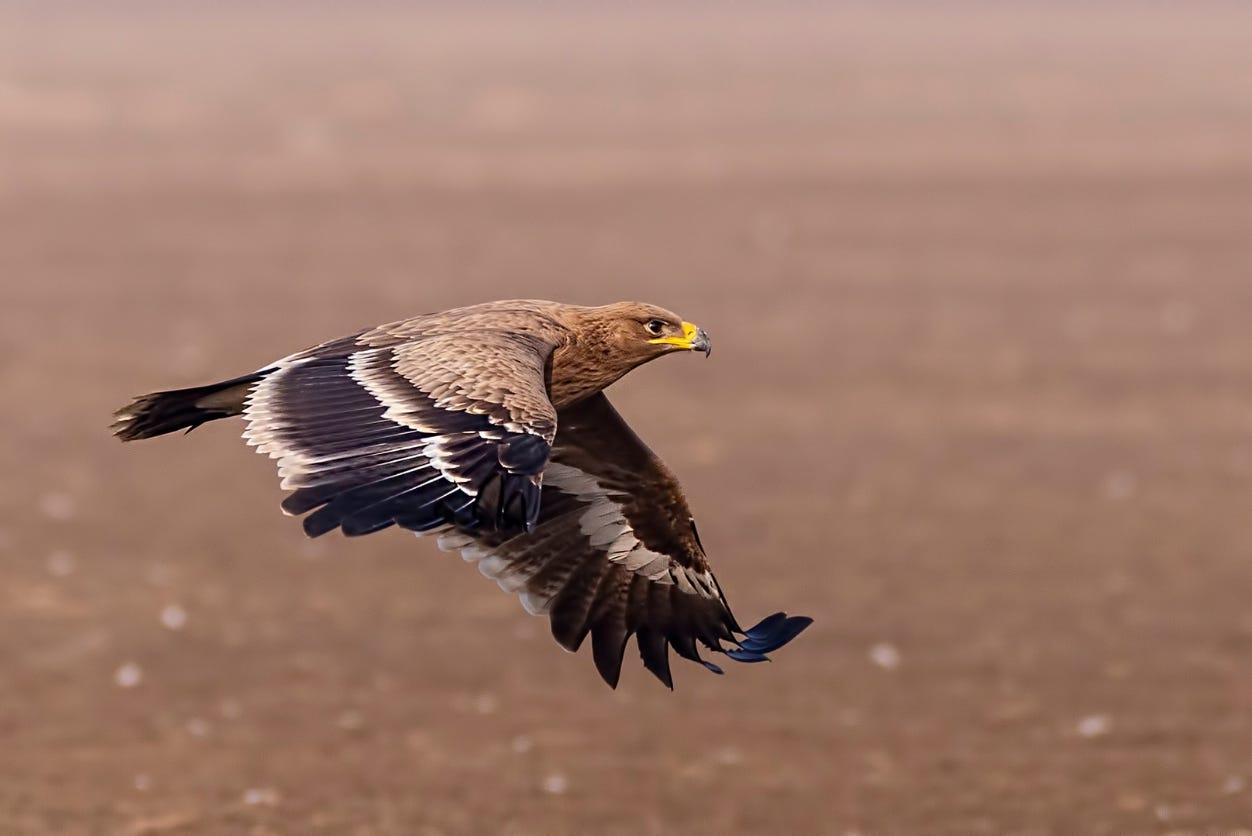
Global plan boosts protection for migratory Steppe Eagles
Key areas of Rajasthan have been included in an international conservation plan for the endangered Steppe Eagle due to the region’s importance as a major wintering ground. The Global Action Plan for Conservation of the Steppe Eagle spans dozens of countries along migratory routes and aims to improve monitoring, reduce threats, and protect habitats critical to the species’ survival. Coordinated global action could significantly improve outcomes for this majestic raptor, which is declining rapidly across much of its range.
Scientists discover three new lizard species in Australia
Researchers in Queensland have identified three previously unrecognized lizard species: the Rainbow Rock Monitor (Varanus iridis), the Orange-headed Rock Monitor (Varanus umbra) and the Yellow-headed Rock Monitor (Varanus phosphoros). The discovery, made through genetic and physical analysis, shows these lizards diverged millions of years ago but were only now distinguished as separate species. Researchers see this discovery as an opportunity to learn more about, and protect, the yet understudied savannah habitat.
Invasive ferrets eradicated from Rathlin Island
Northern Ireland’s Rathlin Island is finally ferret-free. These invasive predators were released in the 1980s to reduce the rabbit population, and have since wreaked havoc on ground-nesting seabirds. In 2021, the Royal Society for the Protection of Birds, Northern Ireland (RSPB NI) established the LIFE Raft project to remove ferrets and give seabirds a chance to recover. Working together with the community, biologists set up thermal drones and cameras to detect animals, and Woody the labrador was trained to sniff them out. Live traps alerted staff and volunteers once as a ferret was caught, and the animals were humanely dispatched. The island ecosystem is already showing signs of recovery, with the return of vulnerable species like Corncrakes and Manx shearwaters.
Farmers helping falcons helping farmers
In Michigan, cherry growers are ditching pesticides for a natural form of pest control: American Kestrels. North America’s smallest falcons, kestrels feed on rodents and fruit-eating birds, and they thrive in open areas with abundant prey. Farmers are attracting these predators by installing nest boxes and leaving patches of grassland habitat around orchards. In turn, kestrels are keeping fruit-loving critters in check; growers that have taken this approach have reported fewer vole sightings and less berry damage. Some have also noted an increase in songbird diversity — likely a result of a healthier insect population. Not only is this nature-based approach good for wildlife but it helps people by reducing exposure to harmful chemicals.
Native seed farm helping restore habitat in California
A nonprofit farm in California’s Sacramento Valley is tackling a critical barrier to large-scale environmental restoration: the shortage of native seeds. Operated by River Partners, Heritage Growers cultivates locally adapted grasses, wildflowers, and shrubs whose genetics are adapted to specific regions. These seeds are already being used in major restoration efforts, helping stabilize soils, support pollinators, and reduce future fire risk. By scaling up production and sharing knowledge, the project is enabling faster, more effective habitat recovery across California.