


Here’s your weekly roundup of the top 5 environmental good news stories from around the world. May these bring you hope for a healing planet.
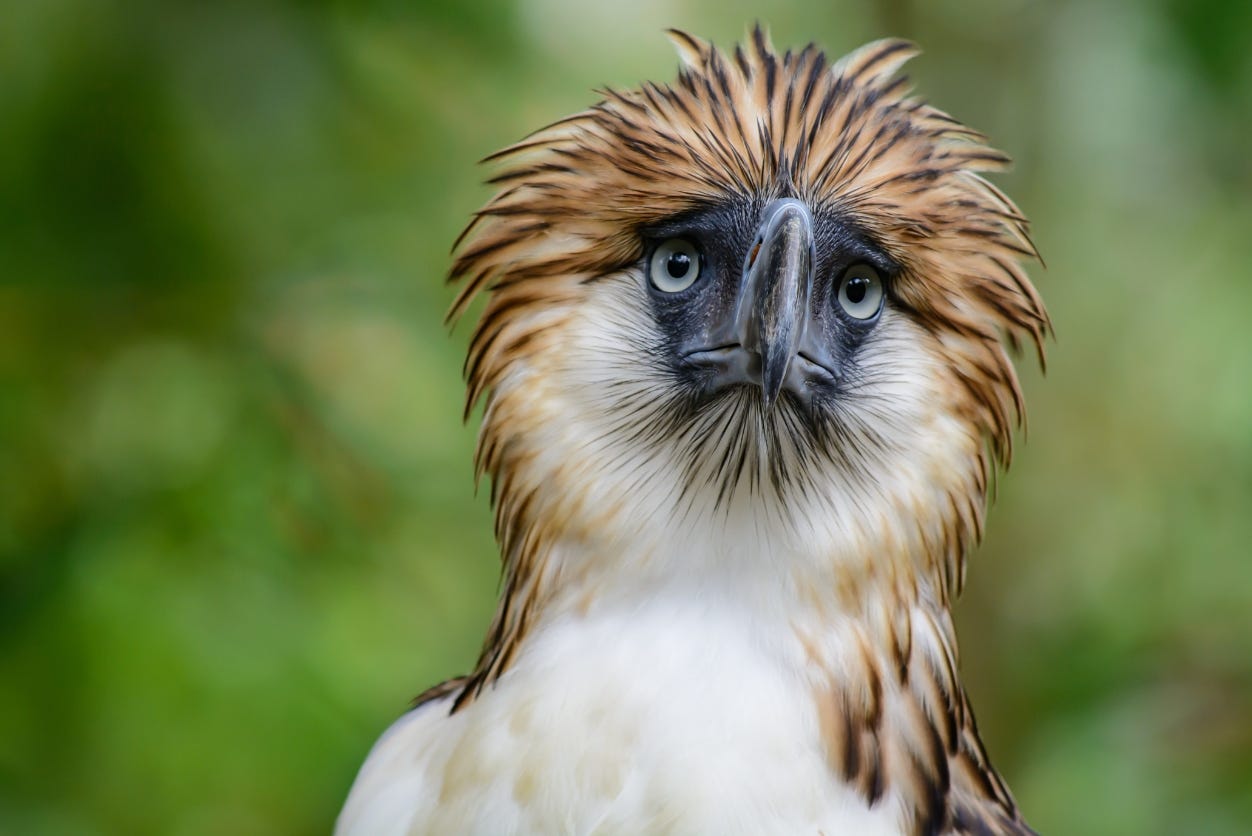
Philippine Eagle nest discovered in protected forest
Researchers in the Philippines have located a new nest of the critically endangered Philippine Eagle. Fewer than 392 breeding pairs remain in the wild. Conservationists have ramped up efforts to preserve these rare raptors since 2020, when a farmer accidentally shot one. Since then, the Philippine Eagle Foundation has been working together with Indigenous forest guards and the local government to conduct forest patrols and wildlife monitoring. It was during one of these surveys in 2025 that the new nest was discovered. Experts say the Philippine Eagle plays a vital ecological role as an apex predator, and its presence indicates a healthy forest.
Angola wetland gains global protection
A vast watershed in southeastern Angola has been designated a Wetland of International Importance under the Ramsar Convention on Wetlands. The Ramsar site acts as a huge natural reservoir, supplying water to the region’s rivers, forests, and peatlands for more than 110,000 square kilometers. The area is home to various endemic fish and plant species, as well as Cheetahs, Lions, African Wild Dogs, and Giant Sable Antelopes.
Rare frogfish raised from egg to juvenile
Scientists at Shedd Aquarium have successfully raised a Warty Frogfish from egg to juvenile for the first time, marking a breakthrough in marine animal care and research. Thousands of larvae hatched, but one survived through five months of careful monitoring of water conditions, lighting, and feeding. The achievement provides valuable insights into the species’ early life stages and could help support captive-breeding efforts for delicate or rarely studied marine species.
Two Great Indian Bustard chicks hatch
Conservationists working on India’s Project Great Indian Bustard have successfully hatched two new chicks — one from natural breeding and another using artificial insemination. The births bring the captive population of this critically endangered bird to around 70 individuals. Scientists plan to soft-release captive-bred birds into the wild, a key step toward rebuilding wild populations of one of the world’s rarest birds.
Research shows plants evolve rapidly to survive drought
A long-term study led by researchers at Cornell University found that populations of the Scarlet Monkeyflower rapidly evolved genetic traits that allowed them to survive a severe multi-year drought in California. Scientists tracked populations for more than a decade and identified genetic changes linked to drought tolerance, providing the first clear real-world documentation of “evolutionary rescue”— when a species adapts quickly enough to avoid extinction. The work suggests that genetic diversity may help some species withstand climate change if populations remain large and connected.