


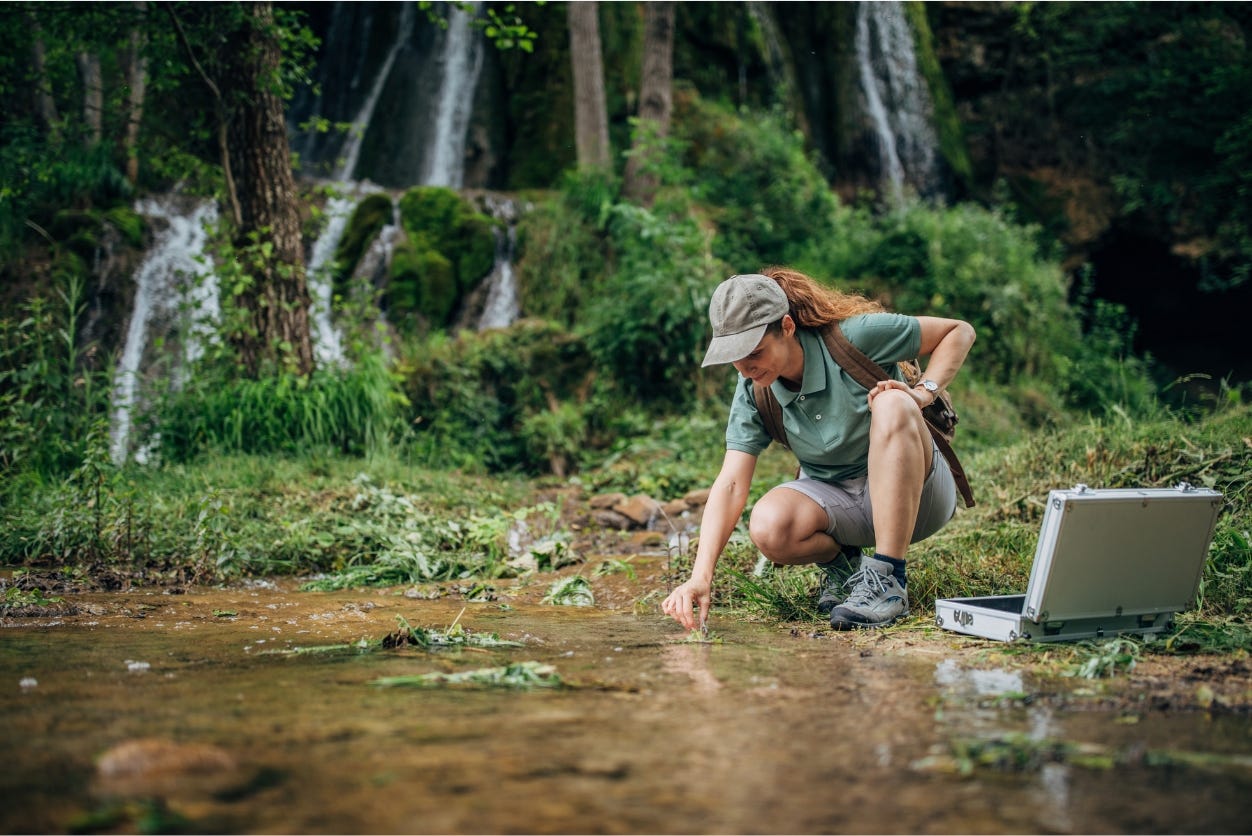
In honour of International Women’s Day, this week’s newsletter is about women in conservation. In many cultures, women are the keepers of traditional ecological knowledge, possessing a holistic understanding of ecosystem health. Women frequently lead grassroots environmental movements and play an important role in conservation and climate action. And, as new research shows, conservation efforts are more successful when women are included. Yet we remain underrepresented in environmental leadership, making up less than a third of the global STEM workforce and holding a fraction of senior climate and conservation decision-making roles.
The good news is, the tide is shifting. The stories below show both the progress being made to bridge the gender gap and why we need more women leading conservation efforts.
Island restoration helping seabirds recover
Conservationists working on the remote Pacific sanctuary of Palmyra Atoll are restoring habitat for nesting seabirds by removing invasive species and rebuilding native ecosystems. Led by bird conservationist Kayla Baker, the team monitors seabird populations and studies how the island’s food web responds as ecosystems recover. Early results show seabird colonies rebounding as habitat conditions improve, demonstrating how targeted restoration can help revive fragile island ecosystems.
Research shows women improve conservation efforts
A global analysis led by researchers at the University of Queensland reviewed dozens of wildlife management projects across five continents and found that conservation efforts are more successful when women are actively involved. The study found that women often contribute unique ecological knowledge and community perspectives that improve species protection, habitat restoration, and anti-poaching efforts. Researchers say the findings highlight the importance of including women in conservation leadership and fieldwork to achieve stronger biodiversity outcomes.
Women scientists protect crocodiles in the Everglades
Researchers known as the “Croc Docs” at University of Florida are leading hands-on conservation work to study and protect the endangered American crocodile in Everglades National Park. The team conducts nighttime surveys by airboat, monitors nesting sites, and tracks crocodile populations to better understand how the species is recovering after decades of decline. Their research provides key data to wildlife managers working to protect critical habitat and ensure the long-term survival of the species in South Florida.
New grants address link between conservation and gender-based violence
The International Union for Conservation of Nature has launched new grants and guidance through its RISE Challenge to address the often-overlooked connection between environmental protection and gender-based violence. The initiative will support projects that promote safer working conditions for women environmental defenders and strengthen community programs that link conservation with gender equity.
$1 Million funding for women-led climate solutions
Daughters for Earth has announced $1 million in new funding to support 43 women-led climate initiatives around the world. The projects focus on solutions such as land conservation, regenerative agriculture, and ecosystem restoration that help address climate change and biodiversity loss simultaneously. By investing directly in women environmental leaders, the program aims to accelerate practical climate solutions while strengthening grassroots conservation efforts.
I would like to hear a discussion of the pros and cons of Mr. Gates's proposed nuclear health plant in Philadelphia. I first saw this mentioned in the Phila. Inquirer this morning, but I had seen nothing about it previously even though evidentlly PA's governor has approved the project. I have seen no appeals for public comment, and I would like to know the process by which this was apparently approved. It appears that it will or would be near where people live. WSJ gives it props for replacing a previously polluted plant on the site, but hmm, what could go wrong with this nuclear project? Please address this from environmental and social viewpoints. Thank you.