


We need good news more than ever right now. That’s why, even when it feels futile, I dig for the best and brightest stories that offer hope. Remember, there are good people in the world who are committed to making the world a better place — not just for people, but for all of the other species we share it with.
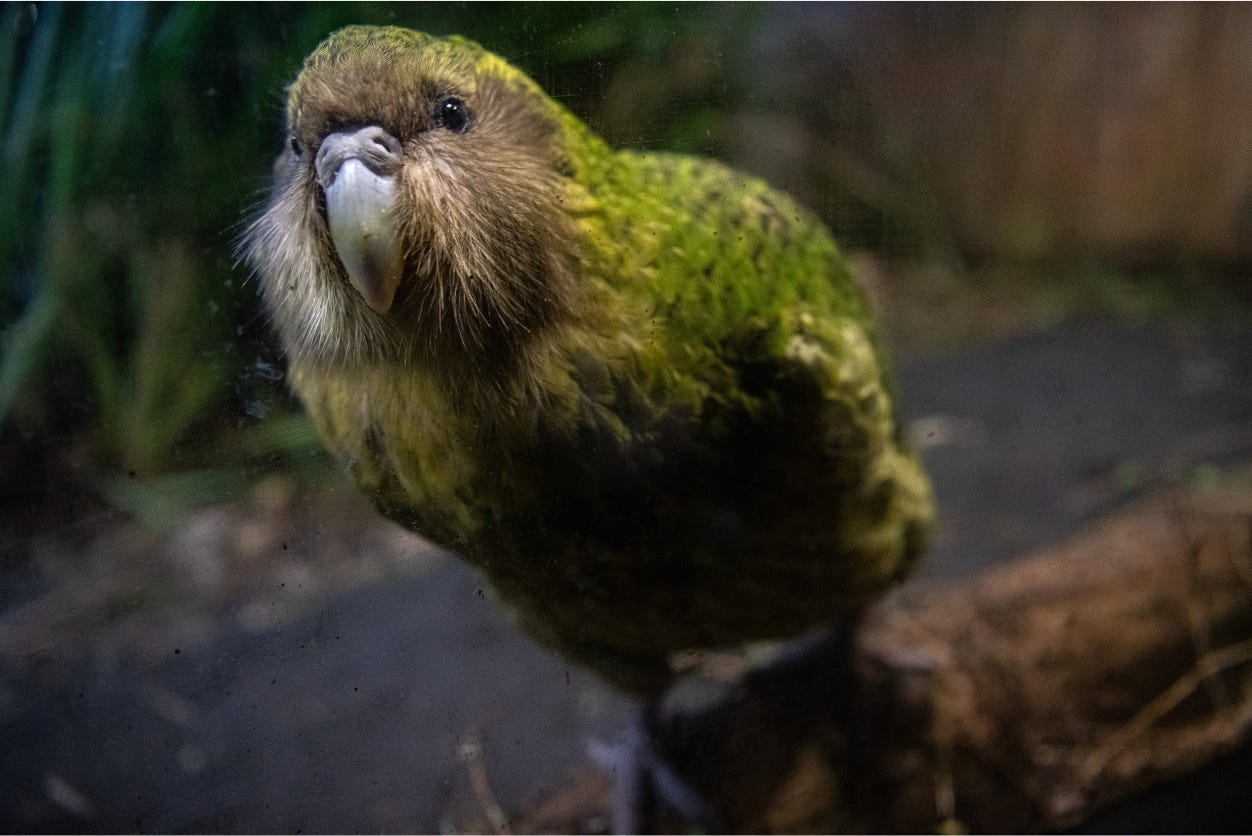
Kakapos getting frisky thanks to bumper crop of berries
A bumper crop of rimu berries in New Zealand has triggered a strong breeding season for the critically endangered Kakapo, a nocturnal flightless parrot. Kakapos live between 60 to 90 years and don’t breed until their teens — and only every 2-4 years when rimu trees mast (produce fruit). This year’s plentiful harvest has prompted increased mating activity and nest preparation. Conservationists managing the intensive recovery program say the synchronized food supply is crucial for chick survival, offering renewed hope for a species whose population once fell to just 51 individuals.
Azores upholds protections in Marine Protected Area
The Azores has successfully dodged a proposal that would have weakened protections within its new Azores Marine Protected Areas Network, which safeguards 30% of Azorean waters. The network consists of 63 individual MPAs, divided evenly into “highly” protected and “fully” protected zones. On January 15, the Azores Parliament voted to maintain the fishing ban in fully protected areas, while pole-and-line tuna fishing will be allowed in the highly protected areas. Conservationists say the vote sets an important precedent for ocean conservation.
Cheetahs airlifted to Kuno National Park
On February 28, nine Cheetahs from Botswana — 6 females and 3 males — were safely airlifted and released into Kuno National Park, India. The animals will stay in quarantined enclosures until they have acclimatized and are ready to be released into the wild. Through Project Cheetah, the relocation aims to re-establish a free-ranging Cheetah population decades after the species disappeared from India. Wildlife officials say the carefully managed transfer and monitoring program represents a landmark conservation collaboration and a major step toward restoring an endangered species to its historic range. India’s Cheetah population now numbers 48 cheetahs, including 28 India-born cubs.
Rare turtles and Gharials Released in Una
In a boost for freshwater biodiversity, 25 baby Three-Striped Roof Turtles and 53 young Gharial were released into the Una River in Madhya Pradesh. The initiative, led by state officials, aims to strengthen fragile reptile populations and restore ecological balance in the river system. Conservationists view such reintroductions as critical for protecting endangered aquatic species while reinforcing broader river restoration efforts.
Houston Audubon protects 128-acre forest in Texas
Houston Audubon has permanently protected 128 acres of pine and hardwood forest in Montgomery County, Texas. Named the Peach Creek Woods Nature Sanctuary, the sanctuary will be permanently protected, even as the region grows. The woodland provides essential habitat for breeding and resident birds and helps keep the San Jacinto River watershed healthy. This is Houston Audubon’s 18th sanctuary, bringing the total land it manages to over 4,300 acres along the Upper Texas Coast. The sanctuary should open to the public in early 2027, once improvements are made. The land was donated by the late conservationist Thomas Lee Maddux.