


Here’s your weekly roundup of environmental good news stories from around the world. Enjoy!
Gentle giants return to the Carpathians
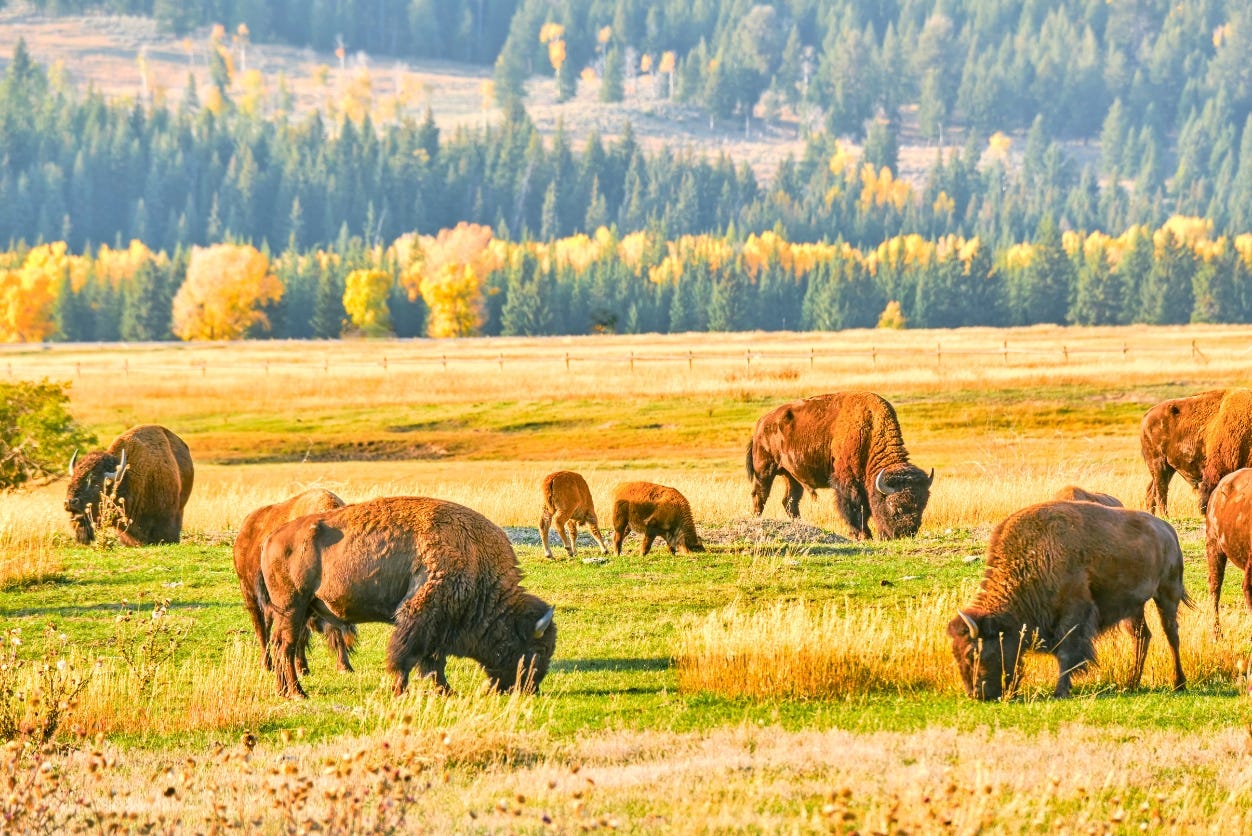
European Bison are once again roaming the Carpathian Mountains of southwestern Romania. Driven to extinction in the wild in the early 20th century, the animals survived only in captivity before coordinated breeding and reintroduction programs helped rebuild their numbers. In 2012, Rewilding Europe worked with WWF Romania and the Municipality of Armeniș to release herds into the Tarcu Mountains, where they have 150,000 hectares to roam free. Bison play a vital ecological role by adding nutrients to soil, dispersing seeds, and boosting biodiversity. The initiative also supports local communities through eco-tourism and renewed cultural pride in Europe’s largest land mammal.
EU bans destruction of unsold fashion
The European Union has adopted new rules prohibiting companies from destroying unsold textiles and footwear, a major step toward curbing waste in the fashion industry. Under the updated Ecodesign for Sustainable Products Regulation, large companies will be banned from discarding unsold clothes and shoes, with transparency requirements forcing businesses to report how many products they throw away. The measure aims to reduce the environmental toll of overproduction and fast fashion, encouraging reuse, recycling, and more durable product design. Smaller companies will have more time to comply, but the policy signals a sweeping shift toward circular economy principles across the EU.
Banteng airlifted to safety in Cambodia
Conservationists have translocated 16 critically endangered banteng — wild cattle native to Southeast Asia — to the Siem Pang Wildlife Sanctuary in northeast Cambodia. Using helicopters to move the animals from isolated forest patches threatened by poaching and habitat loss, the team aimed to boost genetic diversity and improve long-term survival prospects. The carefully coordinated operation marks a significant milestone for Cambodia’s wildlife recovery efforts, as banteng numbers have plummeted across their range. By establishing a more secure breeding population within a protected area, the species might have a fighting chance.
Kenya launches Africa’s first National Carbon Registry
Kenya has launched Africa’s first National Carbon Registry, a digital platform designed to track carbon credits and ensure transparency in climate finance. The registry will record carbon projects and transactions, helping to prevent double counting and boost investor confidence as the country expands its role in global carbon markets. Officials say the system strengthens accountability and positions Kenya as a leader in climate governance, aligning with its broader commitments under the Paris Agreement. By formalizing how carbon credits are issued and traded, the registry aims to attract green investment while supporting emissions reductions and sustainable development.
Japan’s underwater sculpture for sea life
A 40-tonne sculpture named Gaia has been installed beneath the waters of Tokunoshima, Japan, where it is designed to evolve into a thriving artificial reef. Created to support marine restoration, the submerged artwork provides structure for corals, fish, and other sea life to colonize over time. Rather than remaining a static installation, the sculpture is intended to be gradually reclaimed by nature, blending art and conservation beneath the waves. As marine ecosystems face mounting pressures from climate change and overfishing, projects like this highlight innovative ways artists and environmentalists are collaborating to restore ocean biodiversity.