


I’m on vacation this week with my family, and I was tempted to skip this week’s issue. But I haven’t missed one yet, and I know how much we all need good news right now. And as it turned out, it was not hard to gather some hopeful headlines to share with you from the previous week. Enjoy!
Record number of north Atlantic Right Whale calves
Researchers have documented at least 21 North Atlantic Right Whale calves during the 2025–26 calving season, marking the species’ most successful year in more than 15 years. The critically endangered whales have faced intense pressure from ship strikes, fishing gear entanglements, and climate-driven food shifts, making this news especially encouraging. Conservation groups say the rebound reflects years of protective measures and monitoring, though continued vigilance remains essential for the long-term survival of the species.
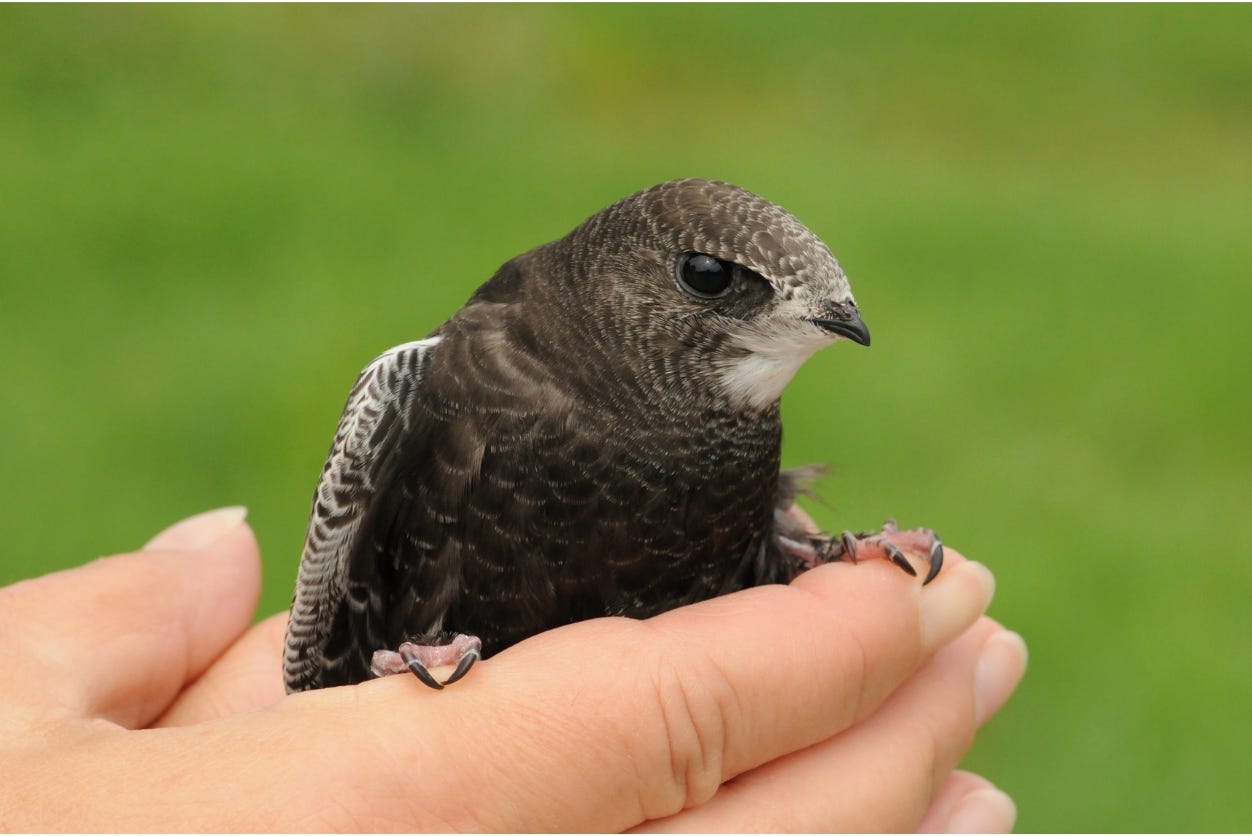
Scottish Parliament passes law to protect swifts
Scotland has passed new legislation requiring “swift bricks” in certain new buildings to provide nesting habitat for the Common Swift (Apus apus). The legislation also aims to support other cavity-nesting birds that use these bricks, including house martins, starlings, and house sparrows. Swifts rely on nesting sites in buildings, many of which have disappeared due to modern construction and renovations. Conservationists say the low-cost measure could make a meaningful difference, embedding biodiversity protection directly into the built environment.
Tunisia turns invasive crab into valuable export
In Tunisia, a conservation initiative has transformed the invasive Blue Crab (Portunus segnis) into a sustainable export product. The crab shredded traditional fishing nests — and the livelihood of fishermen — devouring their catch. Realizing they couldn’t eradicate the species, locals figured out how to commodify it. By creating local markets and international demand, the program helps control crab populations while generating income for fishing communities.
Land snail thought extinct now thrives in Bermuda
The Greater Bermuda snail (Poecilozonites bermudensis), a tiny land snail once believed extinct, is now thriving again in Bermuda. Scientists and conservationists bred tens of thousands of greater Bermuda snails in captivity and carefully reintroduced them to protected habitats. The successful recovery highlights how targeted intervention and persistence can bring even the rarest species back from the brink.
Artificial reef structures restore Cambodia’s marine life
New artificial reef structures off Cambodia’s coast are helping revive damaged marine ecosystems by providing habitat for fish, corals, and other sea life. Designed to mimic natural reef complexity, the structures have already attracted a surge in biodiversity and improved local fish stocks. Conservation groups say the project supports both ecosystem recovery and coastal livelihoods, offering a scalable model for marine restoration elsewhere.