


Here’s your weekly roundup of environmental good news stories from around the world. I hope these bring you a dose of hope and optimism for the week ahead.
New York City’s congestion pricing a huge success
One year after New York City launched congestion pricing in its busiest area, data shows the policy is paying off. The program, which began on January 5, 2025, charges drivers $9 to enter Manhattan below 60th Street during peak travel times.
27 million fewer vehicles entered the zone, resulting in an 11 percent reduction in traffic and 22% less air pollution. With fewer cars clogging streets, buses can get around more quickly, making public transit more appealing; local bus trips are up by 8.4%, and subway trips entering the zone are up 9%. Less traffic has also made streets safer, with a 7% decline in crashes and 8% less traffic-related injuries. Cleaner, safer streets have encouraged more pedestrians to visit, with foot traffic up 3.4%. The program has generated roughly $550 million in revenue.
France’s ban on forever chemicals comes into force
France has brought into force one of Europe’s most comprehensive bans on PFAS, the “forever chemicals” linked to serious health and environmental risks. PFAS are now prohibited in products such as cosmetics, clothing, ski wax, and some consumer goods, with further restrictions planned. The move positions France as a global leader in tackling chemical pollution and reflects growing momentum to regulate substances that contaminate water, soil, and wildlife.
Underwater “hotels” near Guam contain 20 new species
Coral reefs deeper than 100 meters have traditionally been difficult to study — until now. In 2018, researchers deployed a series of autonomous reef monitoring structures (ARMS) off the coast of Guam. Dubbed “underwater hotels,” ARMS are made of stacks of PVC plates with nooks and crannies where sea creatures can make their homes. In November 2025, they collected 13 of them and spent two weeks analyzing their contents. Among the 2,000 specimens collected, there were 100 species never recorded in the region, and 20 species previously unknown to science. The units also recorded temperature data, which showed evidence of a steady warming trend. Scientists hope that knowledge of the biodiversity and temperature of the twilight zone will inform conservation efforts.
Women restore forest in Thailand
In Ban Pong village in northern Thailand, a women-led community group has transformed degraded farmland into a thriving 40-hectare community forest through hands-on restoration and fire prevention. Beginning in 2007, the women planted native trees, built more than 300 small check dams to retain water and soil, and organized dry-season patrols, firebreaks, and early warning systems to stop wildfires before they spread. Their work has kept the forest largely fire-free, improved air quality, allowed wildlife to return, and restored year-round water sources. With healthy soil and water, locals can also earn a living through fishing and harvesting of mushrooms and other forest foods.
Whale-safe crab fishing in the U.S.
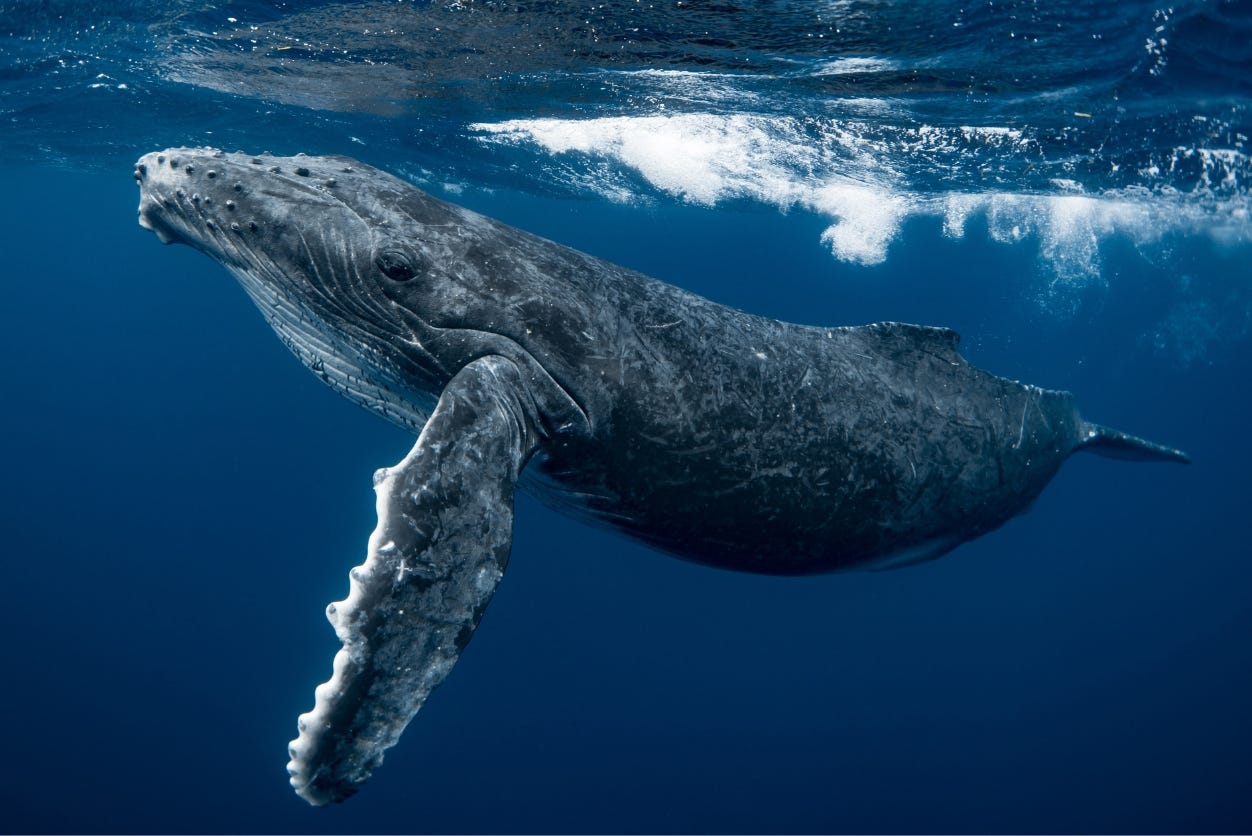
Each year, Humpback, Blue, and Gray whales travel thousands of miles to breed in coastal waters, where they face the risk of becoming entangled in vertical fishing lines used to anchor crab traps. But researchers are finding ways to make crab fishing safer for whales. The main innovation is ropeless crab gear, which keeps vertical lines and buoys on the seafloor until fishers retrieve their traps. These technologies are being tested alongside seasonal fishing restrictions that limit crabbing when whales are most abundant.